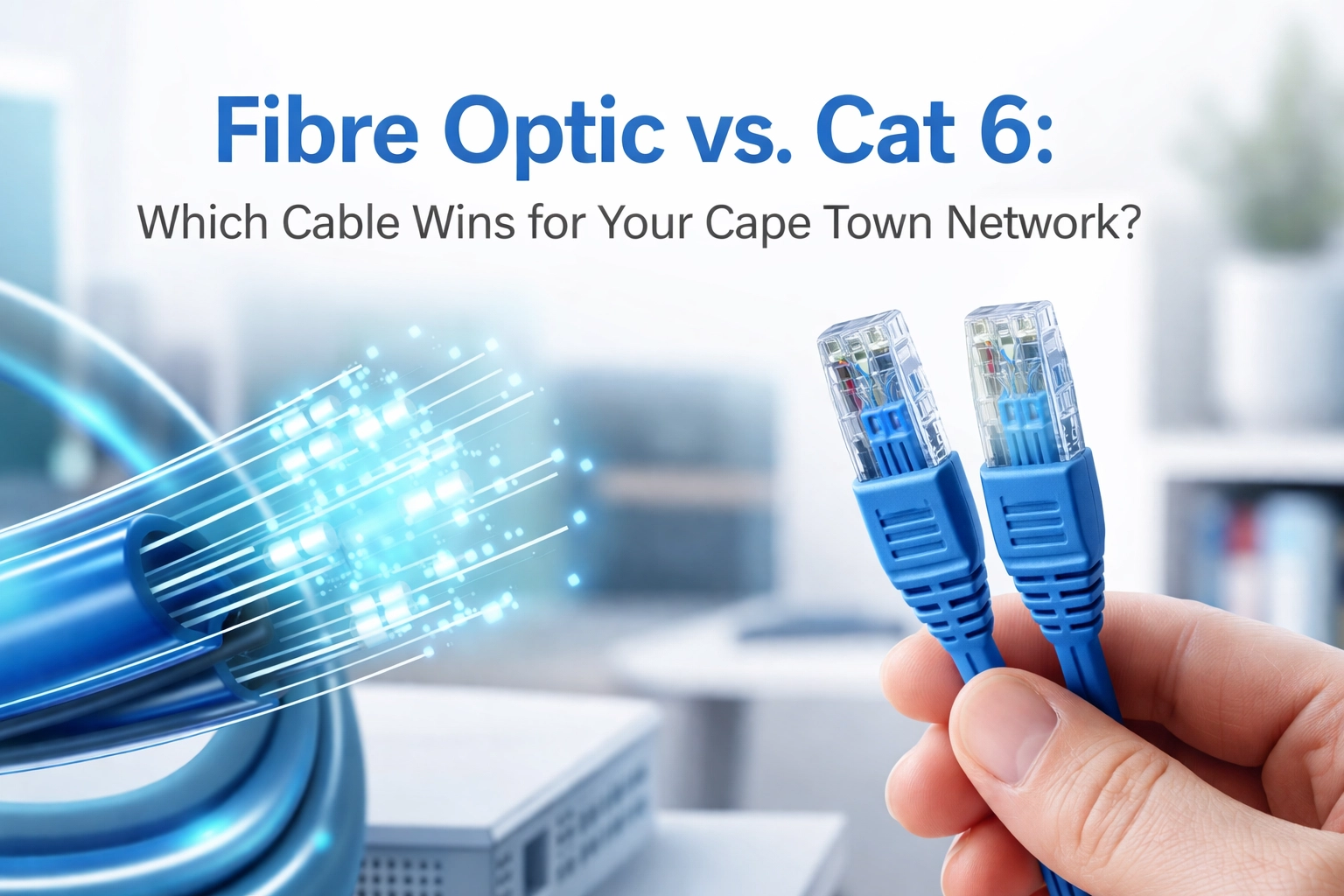
Let's settle this once and for all. You're setting up a network for your Cape Town home or business, and suddenly you're drowning in cable jargon. Fibre optic this, Cat 6 that. Someone mentions "structured data cabling" and your eyes glaze over faster than a Krispy Kreme donut.
Don't worry. We've got you covered.
Here's the truth: both fibre optic and Cat 6 cables are brilliant at what they do. The real question isn't which one is better, it's which one is better for you. Think of it like choosing between a sports car and a reliable bakkie. Both get you from A to B, but they're built for different jobs.
Let's break it down in plain English, shall we?
What Exactly Is Fibre Optic Cable?
Fibre optic cables are the speed demons of the networking world. Instead of using copper wires like traditional cables, they transmit data using pulses of light through thin glass or plastic fibres. Yes, actual light. It sounds like something from a sci-fi movie, but it's very real and very fast.
These cables are the marathon runners of network cabling. They're designed for the long haul: capable of transmitting data over tens of kilometres without breaking a sweat or losing signal quality. When your ISP brings internet into your building, there's a good chance fibre optic cable is doing the heavy lifting from the exchange to your property.
Key fibre optic stats:
- Speeds ranging from 1 Gbps to a mind-boggling 400 Gbps
- Can travel tens of kilometres without signal degradation
- Completely immune to electromagnetic interference
- Excellent security (nearly impossible to tap)
If fibre optic were a person, it'd be that friend who runs ultramarathons for fun. Impressive? Absolutely. Necessary for a quick trip to the shops? Probably overkill.
And What About Cat 6 Cable?
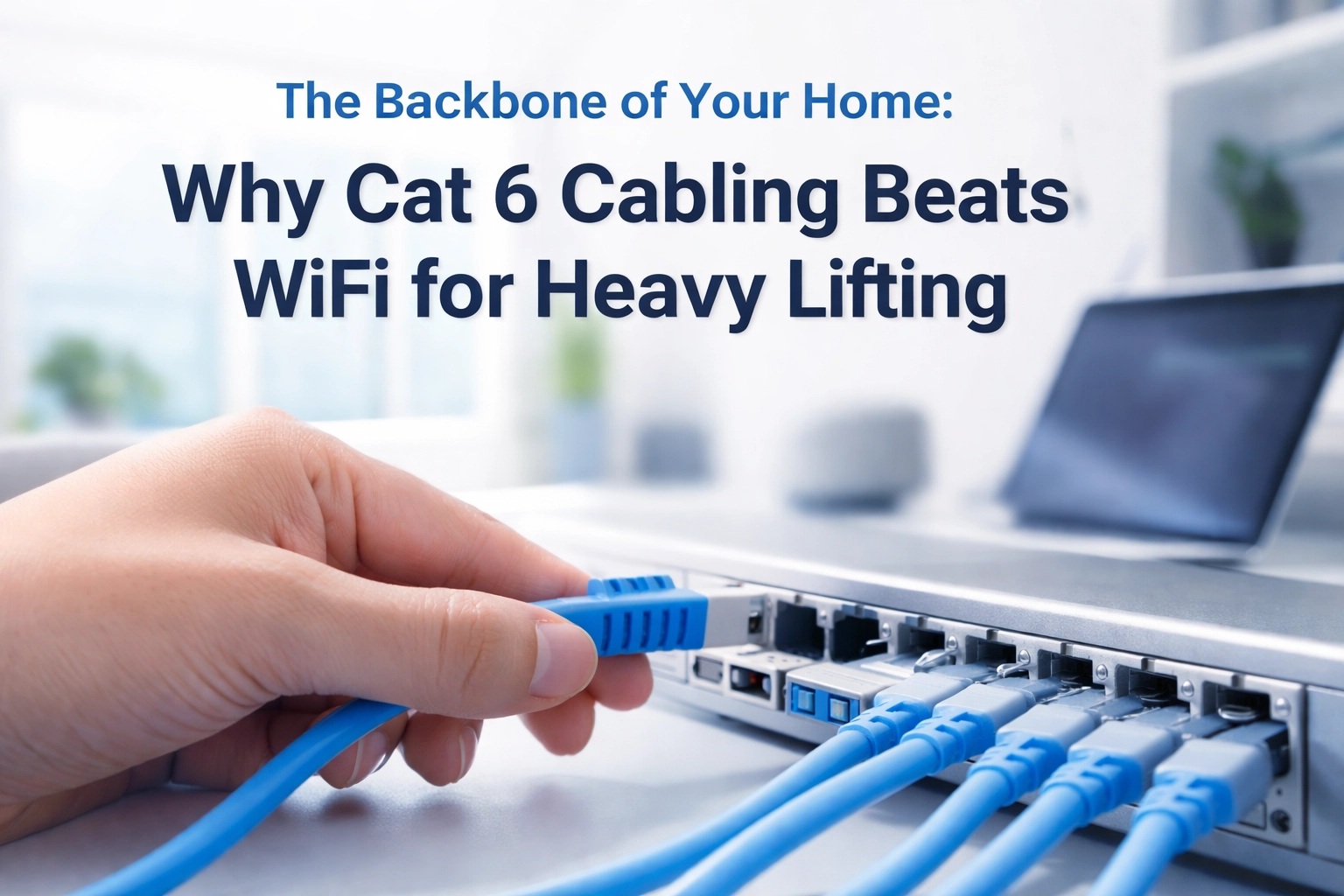
Cat 6 (short for Category 6) is your trusty copper-based Ethernet cable. It's been the backbone of office and home networks for years, and for good reason. Think of Cat 6 as the reliable workhorse that connects all your devices to the network: computers, printers, access points, security cameras, smart TVs, you name it.
While fibre handles the long distances, Cat 6 is all about the last mile (or rather, the last 100 metres). It runs from your network switches and routers to the actual devices you use every day.
Key Cat 6 stats:
- Speeds up to 10 Gbps (over short distances of 55 metres)
- Reliable 1 Gbps speeds up to 100 metres
- Easy to install and terminate
- Backward compatible with older Cat 5 and Cat 5e equipment
- Much more affordable than fibre
Cat 6 is that dependable mate who always shows up on time, gets the job done, and doesn't charge you a fortune for it.
The Speed Showdown: Cat 6 vs Fibre
Let's talk numbers, because everyone loves a good speed comparison.
| Feature | Cat 6 | Fibre Optic |
|---|---|---|
| Maximum Speed | 10 Gbps | 400 Gbps |
| Optimal Distance | 55-100 metres | Tens of kilometres |
| Interference Resistance | Moderate | Excellent |
| Installation Cost | Lower | Higher |
| Future-Proofing | Good | Excellent |
On paper, fibre optic wins the speed race by a landslide. But here's the thing: most homes and businesses in Cape Town don't actually need 400 Gbps speeds. Your Netflix binges, Zoom calls, and even hefty file transfers will run perfectly on a well-designed Cat 6 network.
The magic happens when you use both technologies together, each playing to their strengths.
Distance Matters More Than You Think
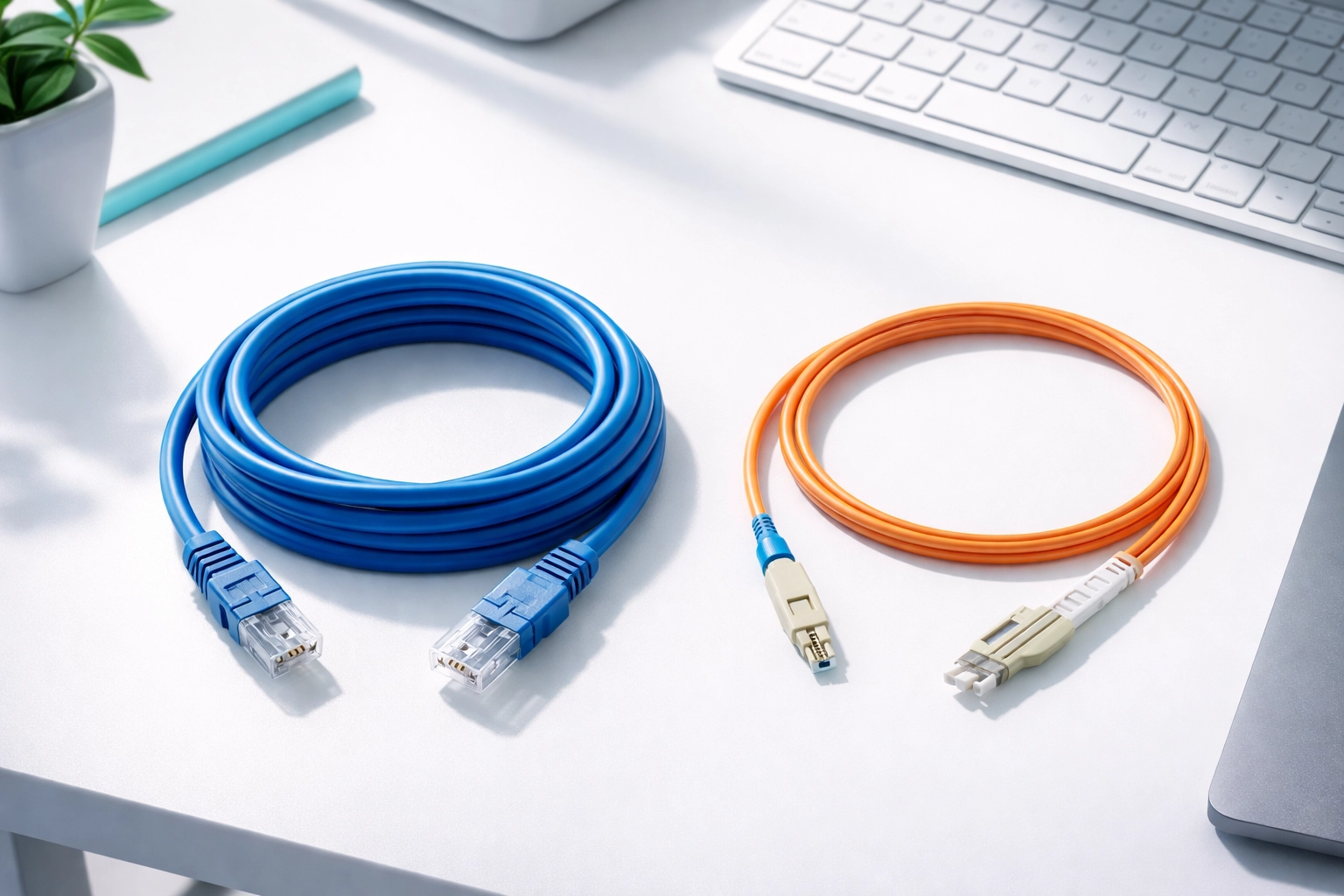
This is where the real difference lies. Fibre optic cables maintain their incredible speeds over vast distances. Whether you're running cable 50 metres or 50 kilometres, the signal stays crisp and strong.
Cat 6? Not so much. Once you push past 100 metres, signal quality starts to degrade. For runs longer than 55 metres, you'll need to drop down to lower speeds or risk unreliable connections.
What does this mean for your Cape Town network?
If you're connecting buildings across a large property, linking a main house to a garden cottage, or running cable across a warehouse, fibre optic is your friend. For everything inside those buildings: connecting your devices to switches and access points: Cat 6 is the smart choice.
It's not cat6 vs fibre in a battle to the death. It's a beautiful partnership.
The Cost Factor: Budget-Friendly vs Future-Proof
Let's be honest: budget matters. And this is where Cat 6 really shines.
Fibre optic installation requires specialised equipment, precision splicing tools, and trained technicians who know their stuff. The cables themselves cost more, and the connectors and transceivers add up quickly. For a small office or home network, the expense often isn't justified.
Cat 6, on the other hand, is significantly more affordable. The cables are cheaper, installation is faster, and most network equipment already has built-in Ethernet ports ready to go. You can achieve excellent performance without breaking the bank.
That said, if you're planning for serious future growth: think data centres, large commercial properties, or businesses with heavy bandwidth demands: investing in fibre optic installation in Cape Town now could save you money (and headaches) down the line.
When Should You Choose Fibre Optic?
Fibre optic is the right call when:
- You need to span long distances between buildings or across large properties
- You require ultra-high bandwidth for data centres or high-demand applications
- Electromagnetic interference is a concern (near heavy machinery or electrical equipment)
- Security is paramount and you can't risk cable tapping
- You're planning significant network growth and want to future-proof your infrastructure
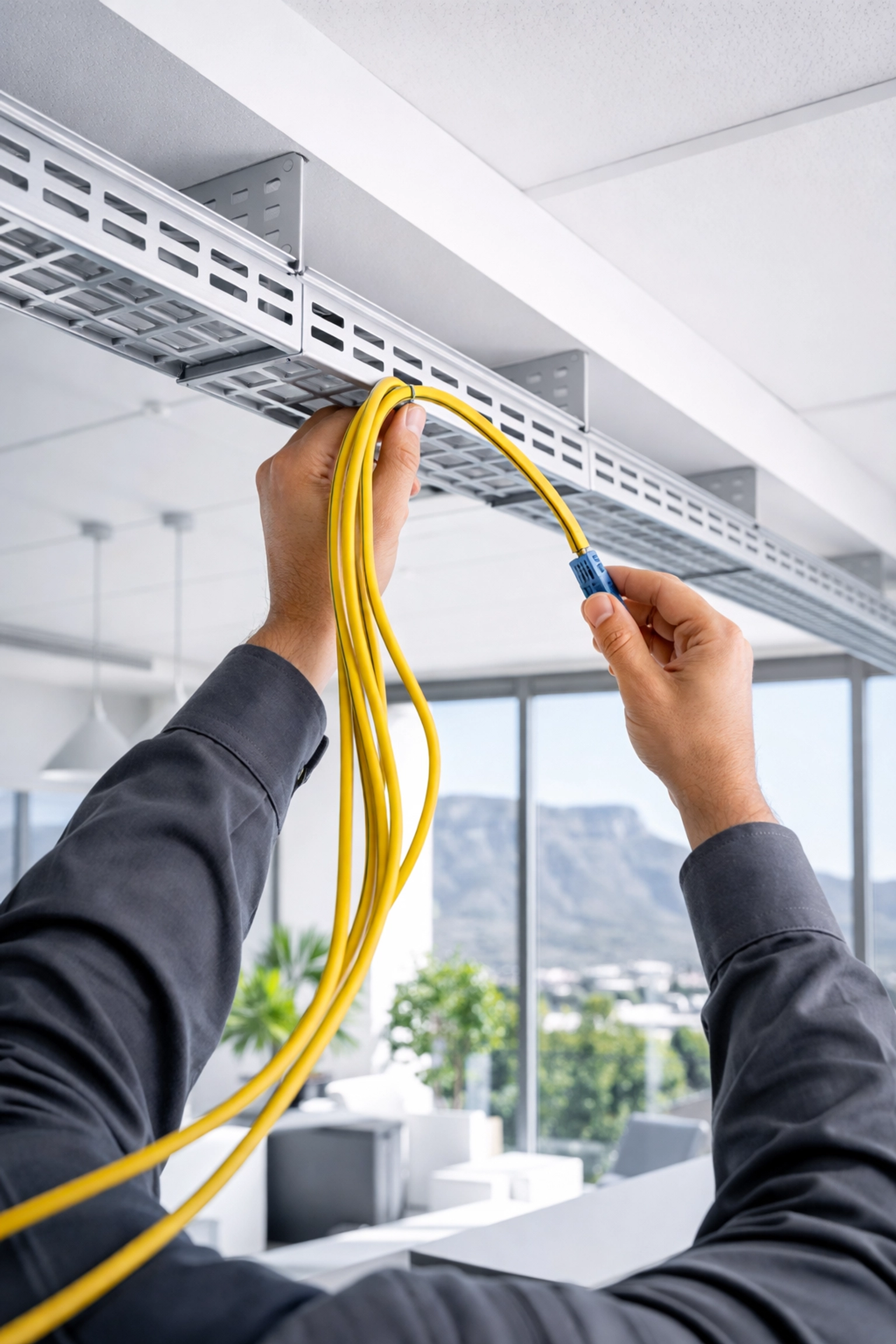
For fibre optic installation in Cape Town, you'll want professionals who understand the local landscape and can design a system that actually makes sense for your needs. That's where WiFi Heroes comes in with our Fibre Optic Cable Installation service.
When Should You Choose Cat 6?
Cat 6 is your best bet when:
- You're connecting devices within a building (computers, printers, access points)
- Budget is a primary concern and you need cost-effective cabling
- Quick deployment is important and you can't wait for specialised installation
- Your cable runs are under 100 metres (which covers most indoor scenarios)
- You need compatibility with existing network equipment
Structured data cabling using Cat 6 creates a clean, organised, and reliable network backbone. No more tangled cables behind desks or dodgy connections dropping out during important video calls. Our Structured Data Cabling service ensures every cable run is neat, labelled, and built to last.
The Smart Approach: Use Both
Here's what the pros know: the best networks use both fibre optic and Cat 6 in harmony.
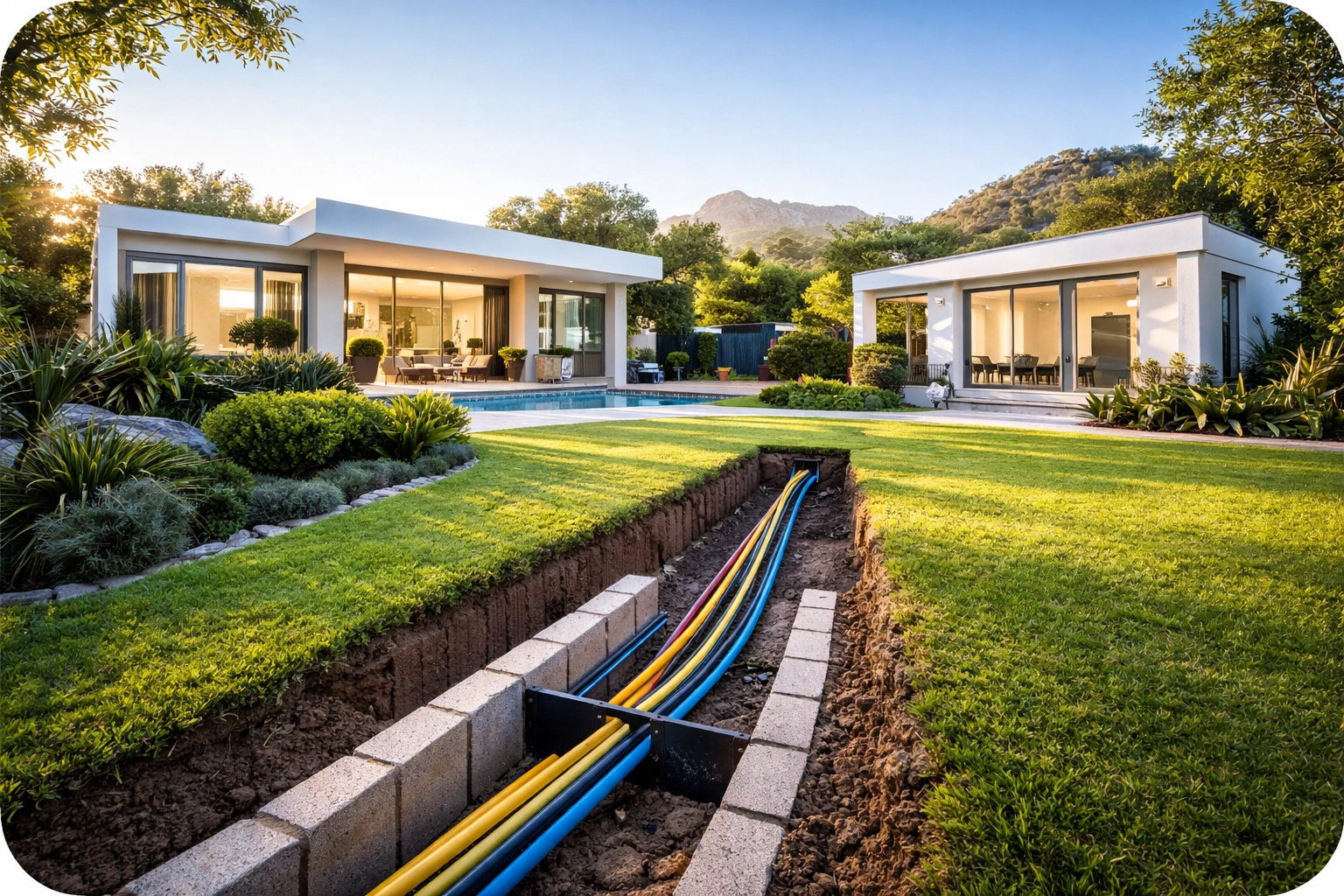
Picture this: Fibre optic cable brings high-speed internet into your building and connects separate structures on your property. From there, structured Cat 6 cabling distributes that connection to every room, every device, every corner where you need reliable connectivity.
It's like having a highway (fibre) feeding into local roads (Cat 6). The highway handles the long-distance, high-speed travel. The local roads get you exactly where you need to go.
What About Wireless? Do I Still Need Cables?
Great question! Even in 2026, with mesh Wi-Fi systems and fancy wireless access points, structured cabling remains essential. Why? Because those wireless devices need to connect to something. A wired backbone ensures your Wi-Fi access points deliver maximum speed and reliability.
Think of it this way: your wireless network is only as good as the cables feeding it. Trying to run enterprise-grade Wi-Fi over old, dodgy cabling is like putting premium fuel in a car with a broken engine.
Ready to Sort Your Network Cabling?
Whether you need fibre optic installation for long-distance runs or structured Cat 6 cabling to connect your devices, WiFi Heroes has got your back. We're Cape Town's network cabling specialists, and we genuinely love this stuff.
No confusing jargon. No unnecessary upselling. Just honest advice and professional installation that works.
Get in touch with WiFi Heroes and let's design a network that actually makes sense for your home or business. Because great connectivity shouldn't feel like rocket science.