You know the face. That slightly frustrated, slightly desperate expression you make when the loading wheel just keeps spinning. Your show buffers at the worst moment. Your video call freezes mid-sentence. Your smart home device decides it no longer understands English.
If you're a homeowner in Cape Town, there's a good chance you've mastered this expression , especially if you live in one of our beautiful older homes with those gorgeous, character-filled, absolutely WiFi-murdering thick brick walls.
Yeah. Those walls.
They're fantastic for keeping your home cool in summer and cosy in winter. But when it comes to letting WiFi signals pass through? They're about as cooperative as a toddler at bedtime.
So what's the fix? How do you get reliable, fast WiFi in every room when your walls seem personally committed to blocking it?
The answer might surprise you: structured cabling.
Let's break it down.
Why Cape Town Homes Are WiFi Nightmares
Cape Town is home to some stunning architecture. From historic Cape Dutch homes in Constantia to charming cottages in Kalk Bay, many of our properties were built with solid materials , thick brick, concrete, and stone walls that have stood the test of time.
The problem? WiFi signals weren't exactly a consideration back then.

WiFi signals travel through the air, and they really don't like obstacles. While they can pass through thin plasterboard fairly easily, thick masonry walls absorb and reflect these signals like nobody's business. The result? Dead zones. Rooms where your WiFi simply refuses to go.
You might have lightning-fast fibre coming into your home, but if your router is in the study and you're trying to work from the bedroom, you might as well be using dial-up.
Sound familiar?
The Usual Suspects: Boosters and Extenders
When most people try to fix slow WiFi in Cape Town, they head straight for the electronics store and grab a WiFi extender or booster. It seems logical, right? Boost the signal, problem solved.
Well, not quite.
WiFi extenders work by receiving your existing signal and rebroadcasting it. But here's the catch , if the signal they're receiving is already weak (thanks to those thick walls), they're just amplifying a weak signal. You end up with slightly better coverage, but the speed takes a serious hit.
It's like photocopying a photocopy. Each generation gets a little worse.
Mesh WiFi systems are a step up. They use multiple nodes that communicate with each other to create a blanket of coverage. They're great for larger homes with open floor plans. But in a Cape Town home with thick internal walls? Those nodes still struggle to talk to each other wirelessly.
The common thread here? They're all trying to push wireless signals through walls that don't want to cooperate.
What if we took a different approach entirely?
Enter Structured Cabling: The Dead Zones Solution
Here's the thing about WiFi: it's just the last few metres of your connection. The "wireless" part. Everything else , from your fibre connection to your router , travels through cables.
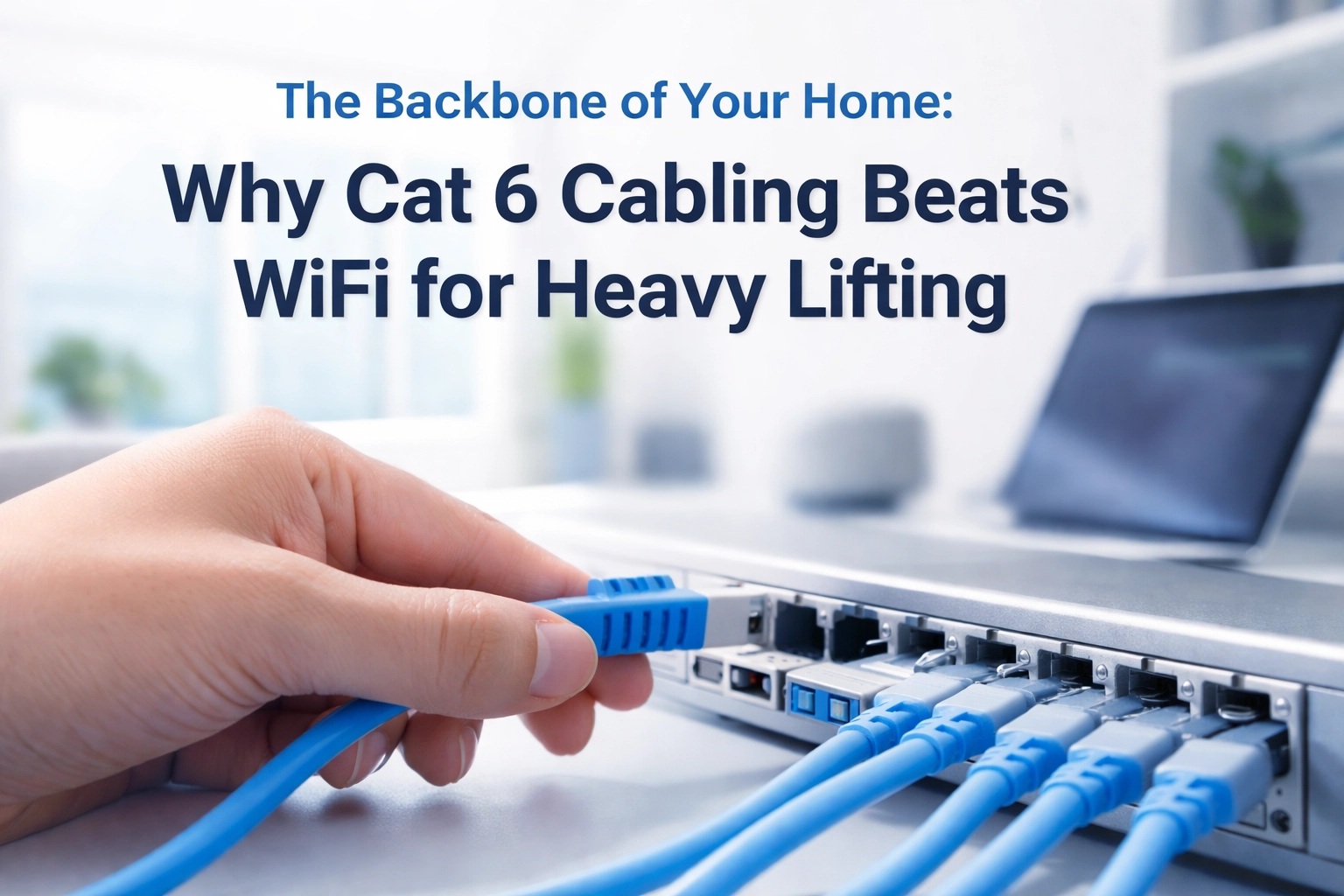
Structured cabling is simply the practice of running high-quality network cables (like Cat 6 or fibre optic cables) throughout your home in an organised, professional way. Think of it as the nervous system of your home network.
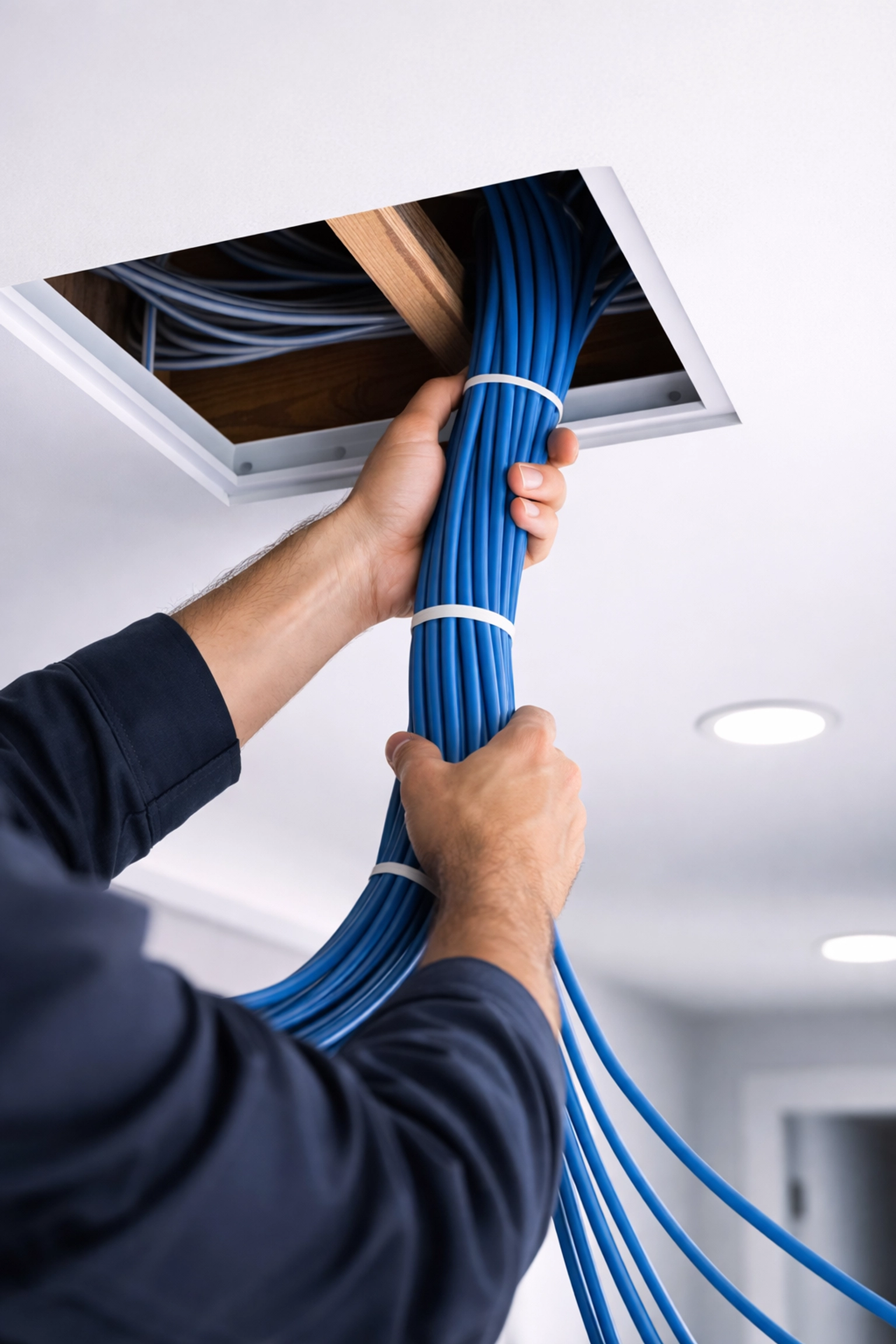
Instead of relying on one router to blast signals through brick walls and hoping for the best, structured cabling lets you:
- Run Ethernet cables to every room where you need connectivity
- Install wired access points in strategic locations throughout your home
- Create multiple WiFi zones that provide strong, reliable coverage exactly where you need it
The result? Perfect WiFi everywhere. No more buffer face.
How It Actually Works (In Plain English)
Let's paint a picture.
You've got a lovely three-bedroom home in Claremont. Your fibre comes in through the garage, and that's where your router lives. The lounge is two thick walls away, and the main bedroom is practically in another dimension as far as your WiFi is concerned.
With structured cabling, here's what happens:
- A network cable runs from your router to the lounge, hidden neatly in the walls or ceiling
- Another cable runs to the bedroom, following the same concealed path
- In each location, a small access point is installed , these are dedicated WiFi broadcasting devices that connect directly to the cable
Each access point creates its own strong WiFi signal in that room. Your devices seamlessly switch between them as you move around the house. No more dead zones. No more buffering. Just fast, reliable internet everywhere.
And because those access points are connected by cable (not wireless), they're getting the full speed of your fibre connection. No signal loss. No degradation.
Why Cat 6 Cabling Is Your Best Friend
When we talk about structured cabling for homes, Cat 6 cable is the gold standard for most residential applications.
Cat 6 (Category 6) cabling can handle speeds up to 10 Gbps over shorter distances and easily supports the 1 Gbps speeds that most fibre connections offer. It's affordable, durable, and future-proof enough to handle whatever your internet provider throws at it for years to come.
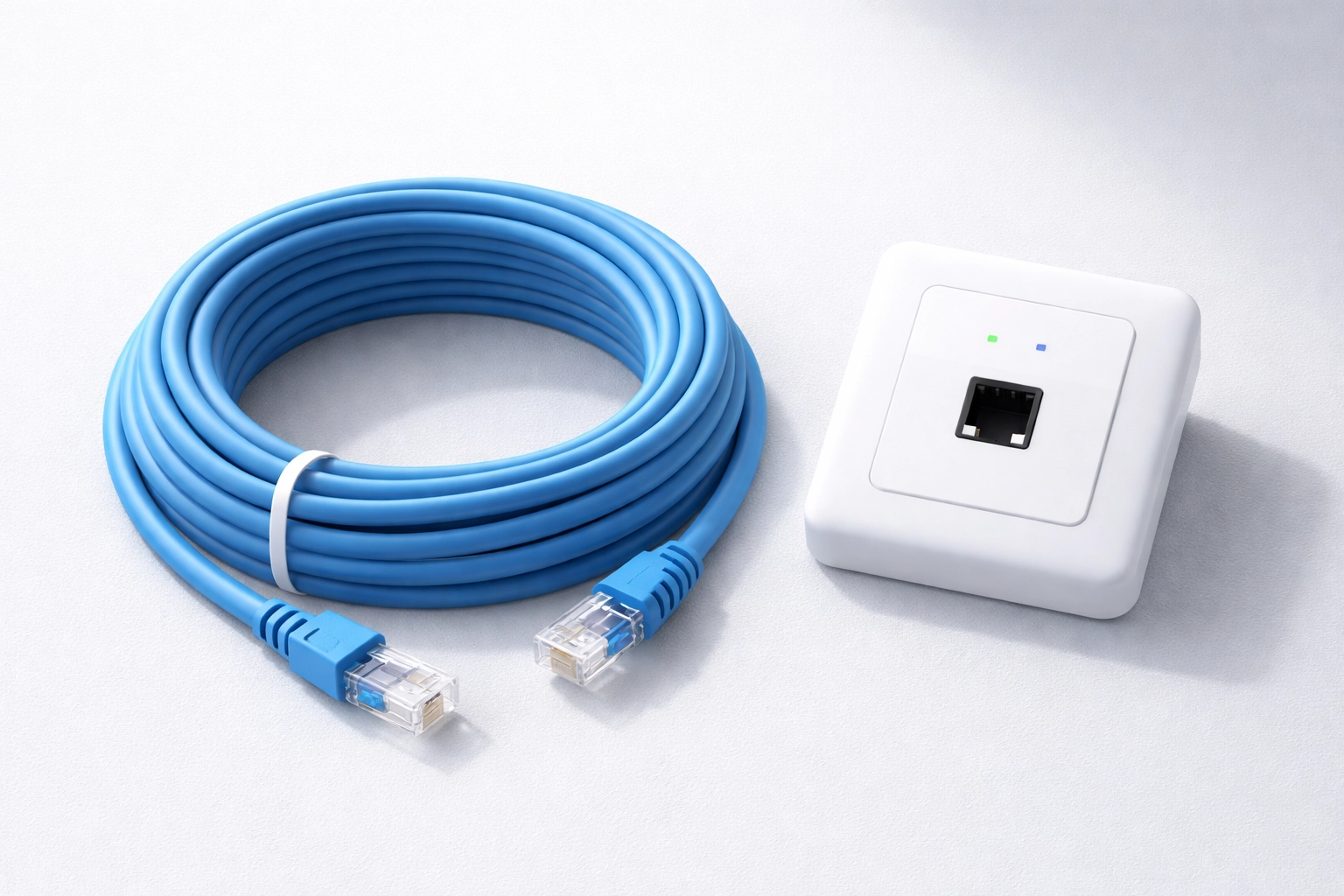
For larger properties or those wanting the absolute best, fibre optic cabling is an option too. Fibre offers even higher speeds and can run over longer distances without signal loss. It's particularly useful for connecting separate buildings , like a home office in the garden or a granny flat.
The key is having these cables installed properly. That means:
- Neat, concealed routing through walls, ceilings, or under floors
- Proper termination at wall plates or patch panels
- Testing to ensure everything works perfectly
This is where professional installation makes all the difference.
The WiFi Heroes Approach
At WiFi Heroes, we've helped countless Cape Town homeowners escape the tyranny of thick walls and WiFi dead zones.
Our approach combines two key services:
Wi-Fi Troubleshooting , We start by understanding your specific situation. Where are the dead zones? What's causing them? What does your current setup look like? Sometimes there are quick wins. Other times, a more comprehensive solution is needed.
Structured Data Cabling , When cabling is the answer (and for thick-walled Cape Town homes, it often is), we design and install a cabling infrastructure tailored to your home. Neat, professional, and built to last.

We don't believe in one-size-fits-all solutions. Every home is different, and your network should be designed around how you actually use it.
Working from home and need rock-solid connectivity in your office? Sorted. Kids streaming and gaming in their rooms? Covered. Smart home devices scattered throughout the house? No problem.
Is Structured Cabling Right for Your Home?
Structured cabling isn't necessary for every home. If you live in a modern apartment with thin walls and open spaces, a good mesh system might be all you need.
But if you're dealing with:
- Thick brick or concrete walls that kill your WiFi signal
- Multiple floors with poor coverage between them
- A large property where wireless signals simply can't reach
- Work-from-home requirements that demand reliable connectivity
- Frustration with extenders and boosters that just don't cut it
Then structured cabling is almost certainly the solution you've been looking for.
It's an investment, yes. But it's one that adds value to your property, eliminates daily frustration, and gives you internet that actually works the way it should.
Ready to Ditch the Buffer Face?
Life's too short for slow WiFi. If you're tired of dead zones, dropped connections, and that infuriating spinning wheel, it might be time to take a different approach.
Structured cabling isn't just for offices and commercial buildings. It's the secret weapon that smart Cape Town homeowners are using to finally fix slow WiFi : for good.
Want to find out if it's right for your home? Get in touch with the WiFi Heroes team for a no-obligation chat. We'll assess your situation and recommend the best solution for your specific needs.
No more buffer face. Just fast, reliable WiFi in every room.
Now that's heroic.