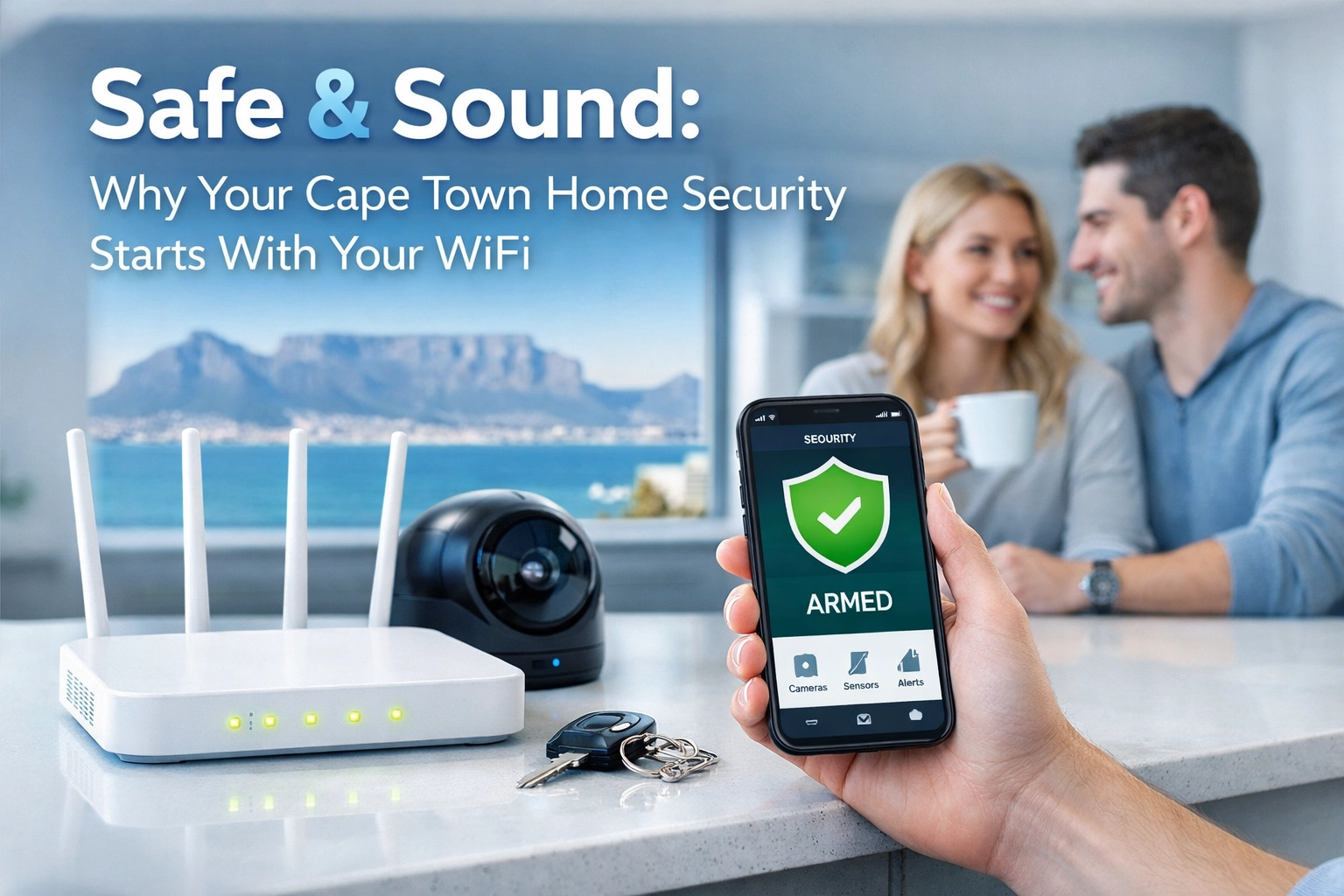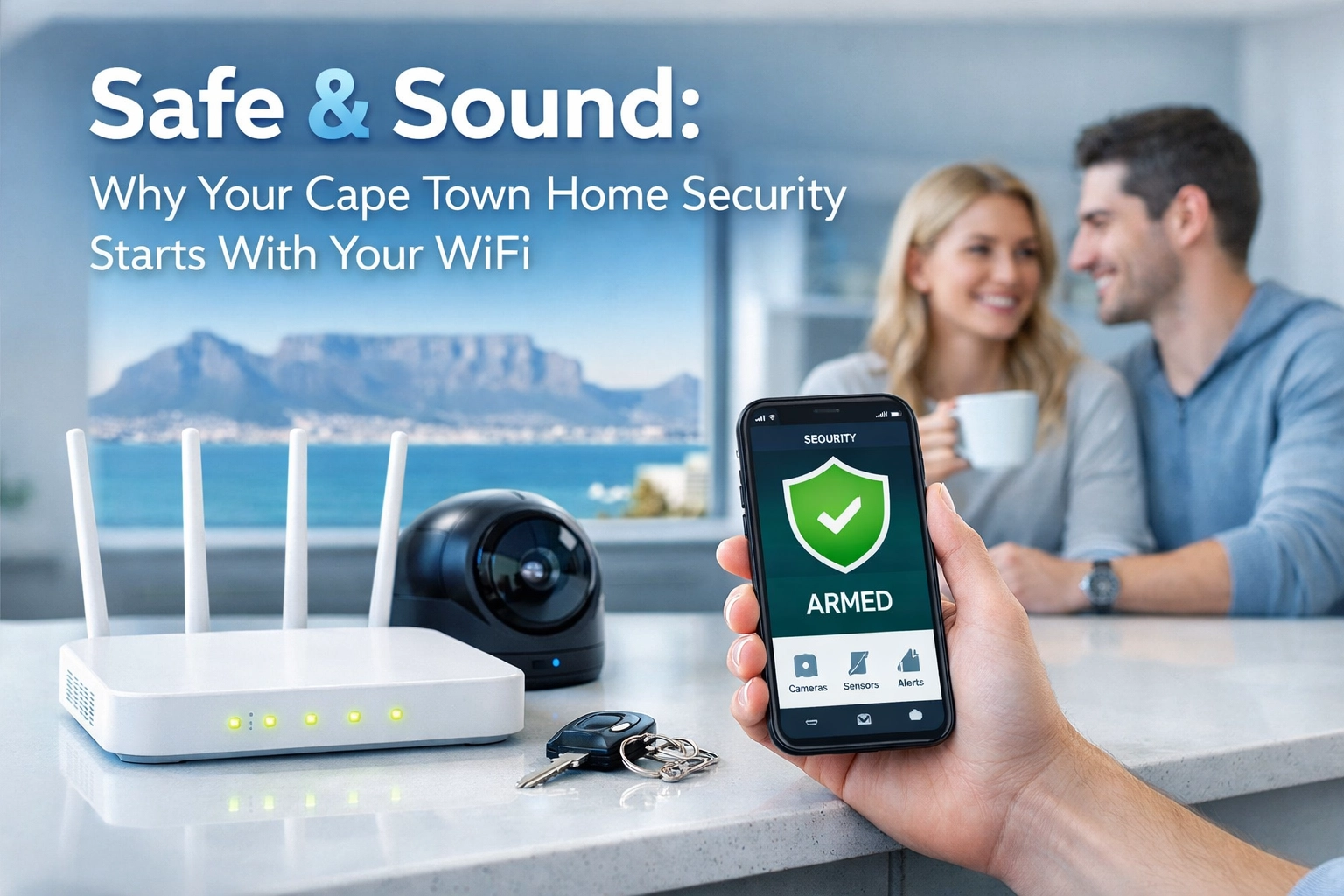
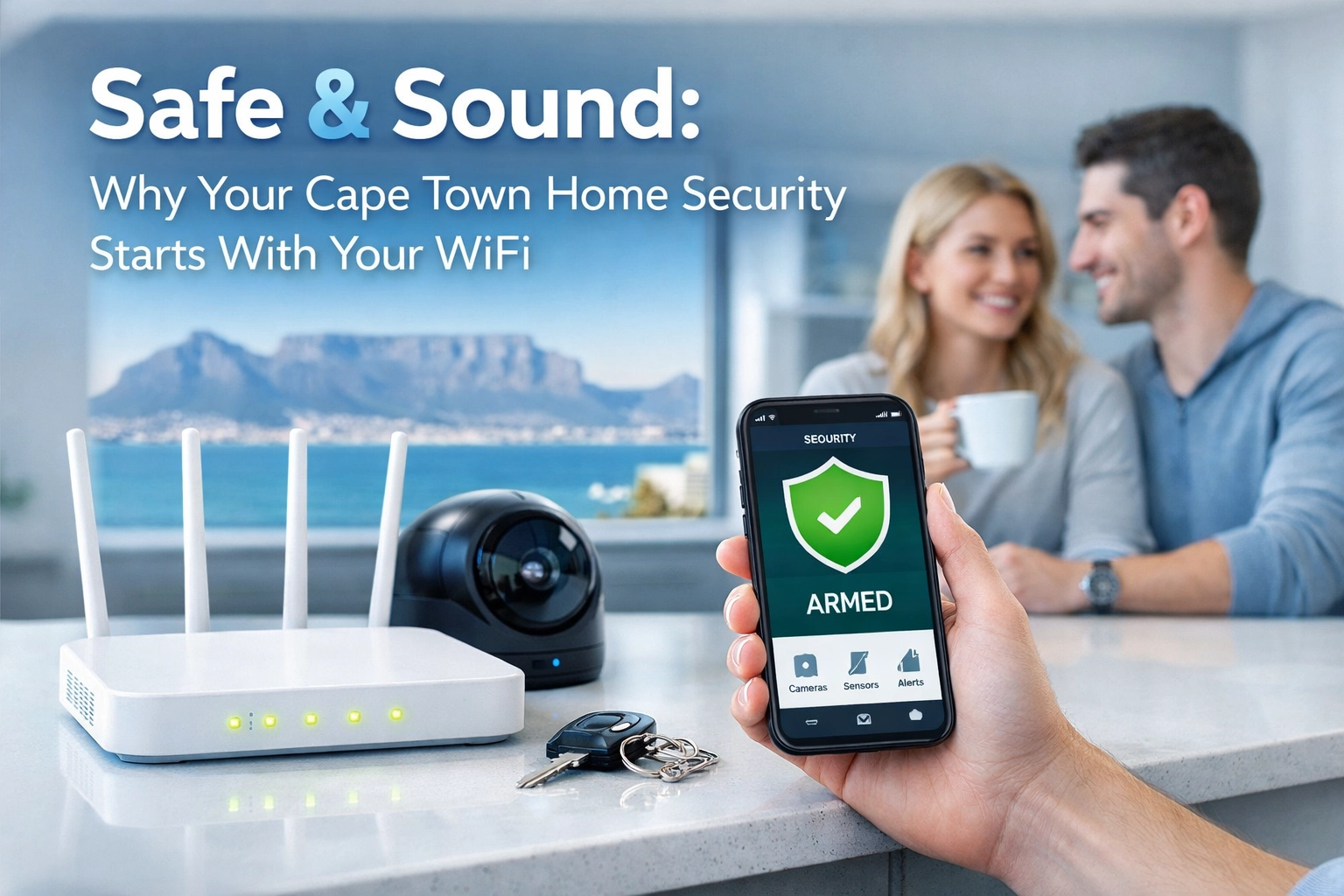
Let's be honest, Cape Town homeowners know security isn't optional. Whether you're up in Camps Bay with those killer ocean views or nestled in the leafy streets of Constantia, keeping your home safe is always top of mind. But here's the thing nobody talks about: Your fancy security system is only as good as the network running it.
You could have the best CCTV cameras money can buy, a smart alarm that sends alerts faster than you can say "load shedding," and a Ring doorbell that makes your neighbours jealous. But if your WiFi drops? Congratulations, you've just installed very expensive paperweights.
Your Security System Lives on Your Network (For Better or Worse)
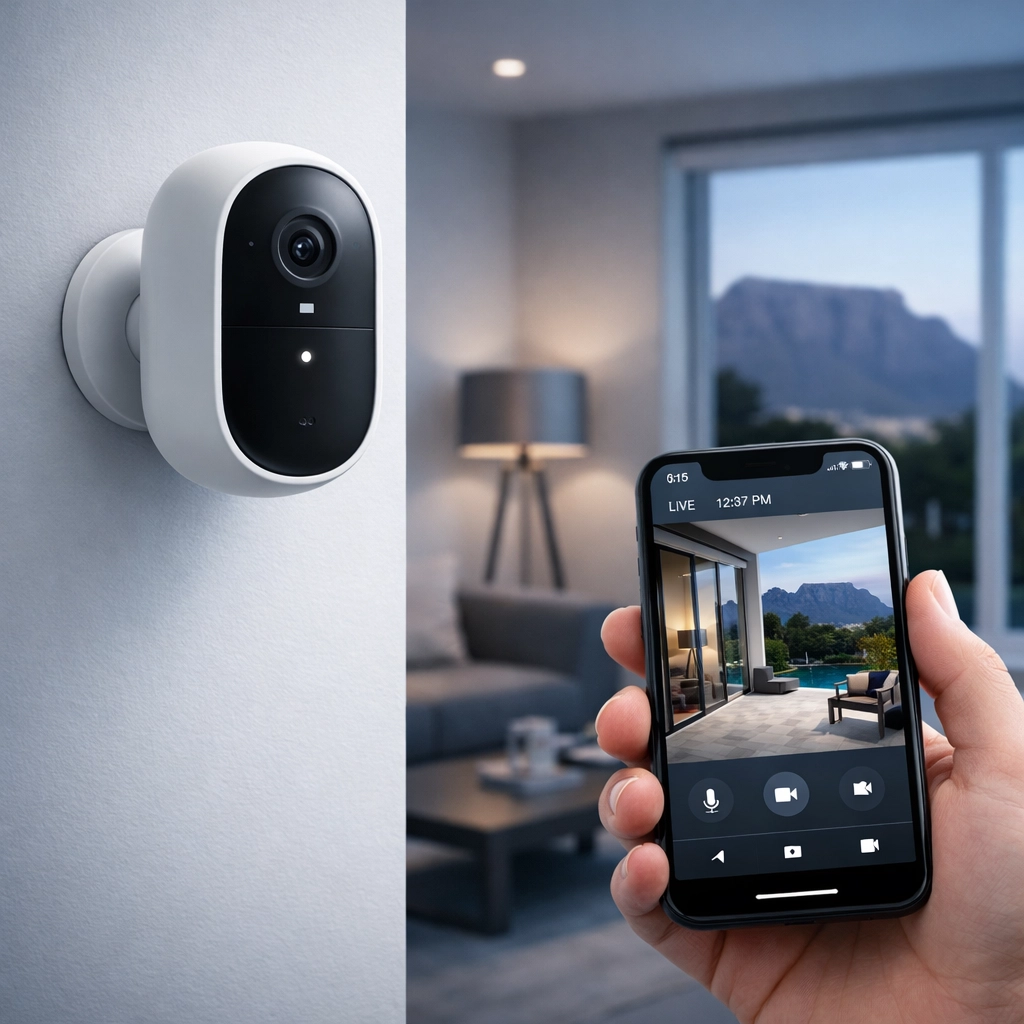
Modern home security isn't about a loud siren and hoping for the best anymore. We're talking smart cameras, app-controlled alarms, video doorbells, and motion sensors that ping your phone the second something moves. It's brilliant… when it works.
The catch? All these devices need a solid, reliable network connection to function. Here's what happens when your WiFi isn't up to scratch:
- Your CCTV cameras buffer like it's 2005 YouTube
- Motion alerts arrive 10 minutes late (by which time the intruder has made tea and left)
- Your video doorbell shows you a pixelated blob instead of a face
- Remote monitoring becomes remote hoping
According to recent data, roughly 98% of armed-response call-outs in South Africa are false alarms. A reliable WiFi connection with live video feeds lets you actually check what's happening before you send the cavalry. That Ring doorbell notification? It could be a package delivery, not a break-in attempt.
The "Safe" Part Isn't Just the Cameras, It's Your Network Security Too
Here's where things get interesting. A lot of folks in Sea Point and Green Point invest thousands in top-tier security hardware, then connect it all to their default router with a password like "admin123." That's like installing a titanium front door and leaving a key under the mat.
Hackers love poorly secured smart home devices. Your security camera could become someone else's window into your home if your network isn't properly locked down. We're talking:
- Weak WiFi passwords
- Default device credentials that were never changed
- Outdated firmware on routers and cameras
- No network segmentation (your doorbell shouldn't be on the same network as your laptop)
A properly configured network includes strong encryption, regular firmware updates, and ideally a separate IoT network for all your smart security devices. Think of it as a security system for your security system. Meta, right?
The Great Debate: Hardwired vs. Wireless Security
Let's settle this once and for all. Wireless is convenient. Hardwired is bulletproof.
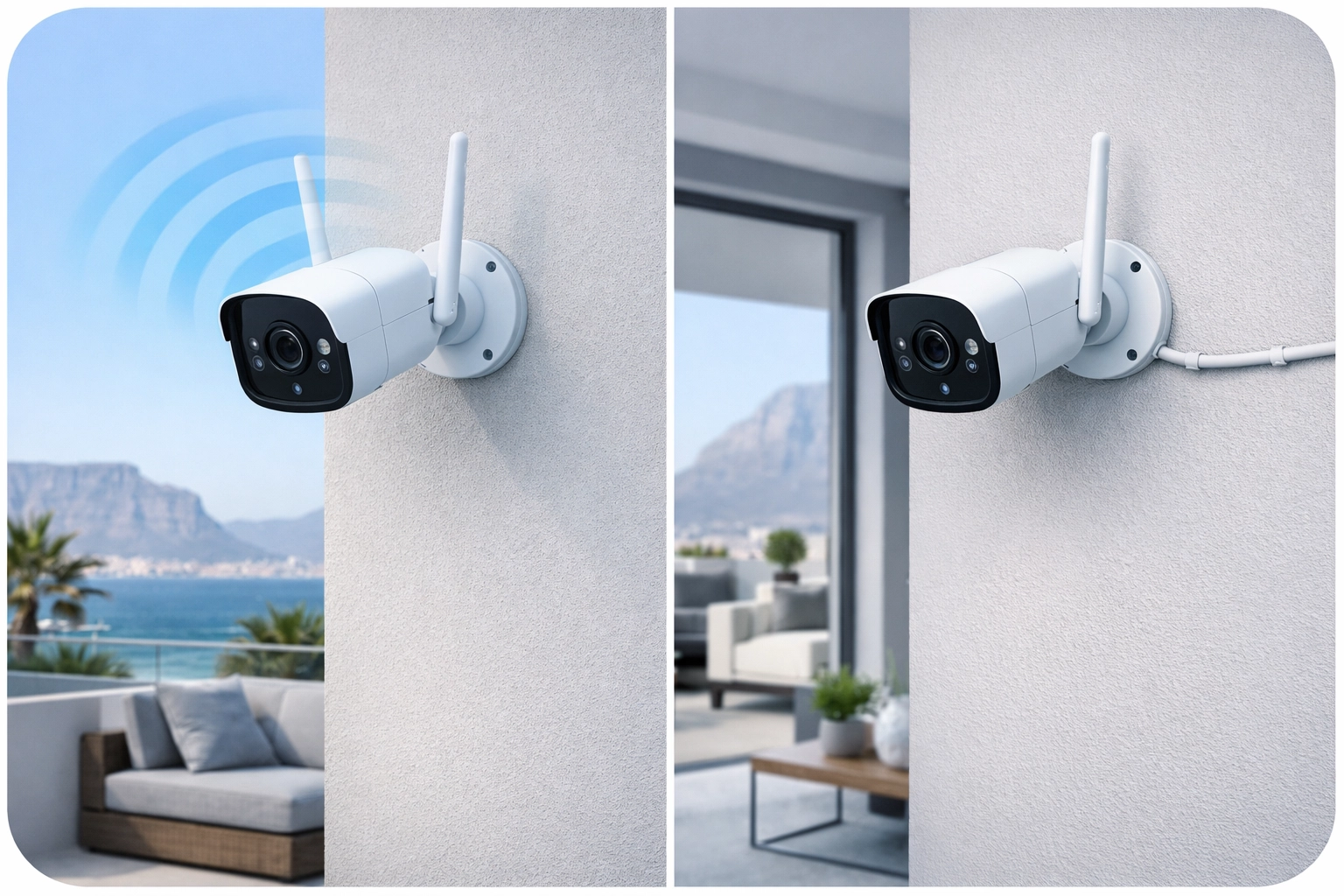
WiFi cameras are fantastic for flexibility, you can stick them almost anywhere without drilling holes through your walls or running cables. But here's the reality check:
WiFi cameras rely on… well, WiFi. If your signal strength is weak, your camera feed will be choppy. If your network goes down, so does your surveillance. And in areas with thick walls (hello, older Cape Town homes), wireless signals can struggle.
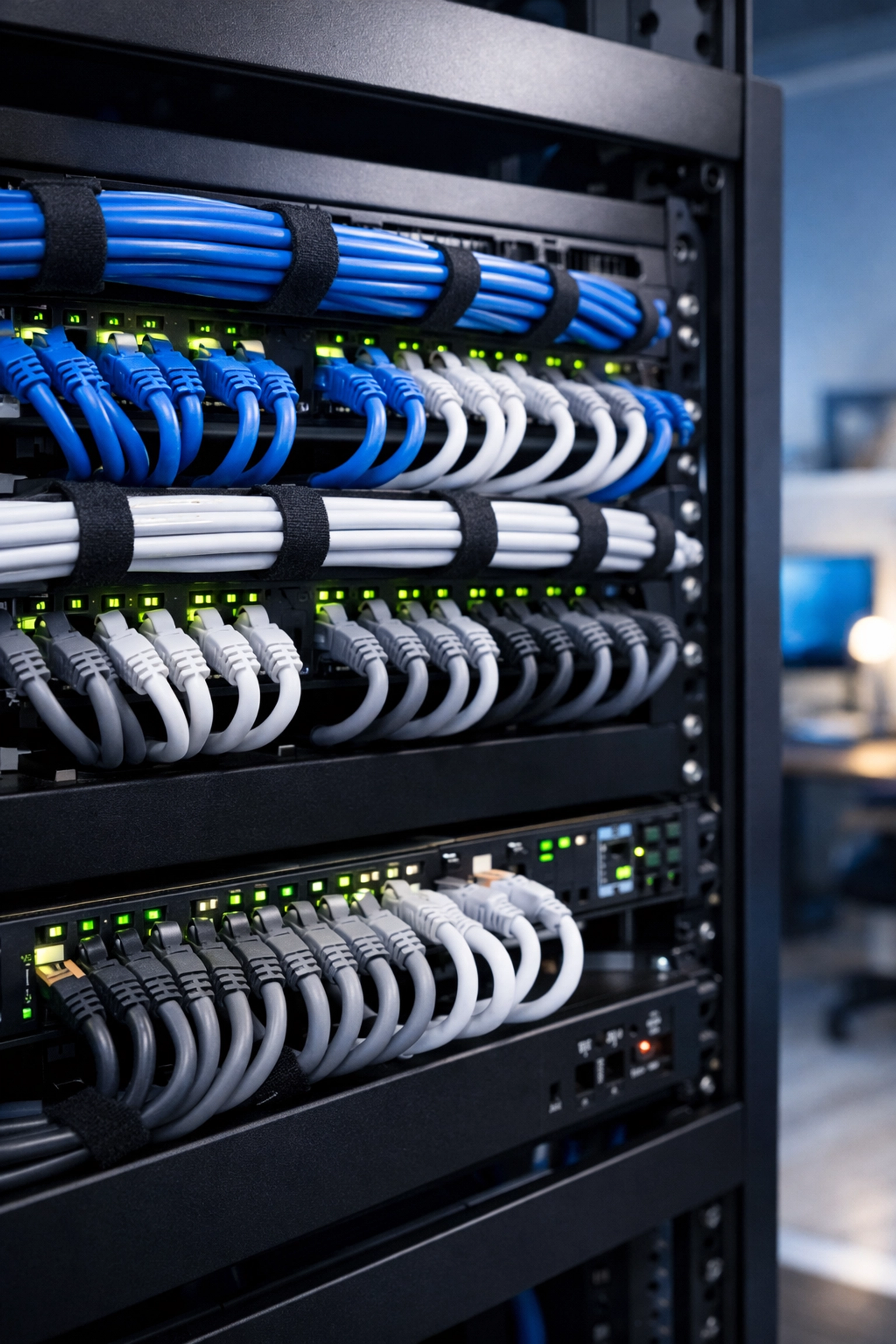
Hardwired cameras using structured data cabling are the gold standard for reliability. They don't care about WiFi dead zones, interference from your neighbour's router, or that microwave you just switched on. The connection is direct, fast, and consistent. For critical security points: like your front entrance or driveway: hardwired is the way to go.
That said, the best security setups use a hybrid approach: hardwired cameras for the essential zones, wireless for flexibility in less critical areas, all backed by enterprise-grade WiFi infrastructure.
Why DIY Security Installation Can Go Sideways
YouTube makes everything look easy, doesn't it? "Install your own CCTV in 10 minutes!" they say. What they don't show you is:
- The camera placement that creates massive blind spots
- The WiFi range issues discovered after you've mounted everything
- The network configuration headaches when devices won't connect
- The security vulnerabilities you didn't even know existed
Professional installation isn't just about drilling holes and mounting cameras. It's about:
- Site surveys to identify the best camera angles and network coverage
- Network design that can actually handle multiple HD video streams
- Proper cabling infrastructure for reliability
- Security hardening to keep the bad guys out of your system
- Integration so everything works together seamlessly
What Makes a Security-Ready Network?
If you're investing in proper home security (and in Cape Town, you absolutely should), your network needs to be up to the task. Here's what that actually means:
Physical Security Essentials (Because WiFi Can’t Lock Up Your Passport)
A rock-solid WiFi network is what makes monitoring, recording, and instant alerts possible. But it’s not a replacement for basic physical security.
If you’ve got valuables like cash, jewellery, passports, important documents, spare keys, or backup drives, they should live in a proper physical safe (ideally bolted down). Think of it as the “last line of defence” if someone ever gets inside.
Here’s the cool part: you don’t have to choose between physical and smart. You can add smart sensors to a safe (like vibration/tamper sensors or door/contact sensors), so you get a notification on your phone if the safe is moved, opened, or messed with. That’s the perfect bridge between physical security and the digital side your WiFi network supports.
Bandwidth: Multiple cameras streaming 1080p or 4K video eat bandwidth for breakfast. Your network needs to handle this plus everything else you're doing online.
Coverage: Dead zones aren't just annoying: they're security vulnerabilities. Every corner of your property needs solid coverage.
Reliability: Your security system can't take coffee breaks. Network uptime is non-negotiable.
Segmentation: Smart security devices should live on their own network segment, isolated from your personal devices and data.
Remote access: You need secure, reliable remote access to check cameras and control systems when you're not home. Whether you're at the office in Long Street or on holiday in Zanzibar, your security system should be accessible.
Where WiFi Heroes Comes In
Look, we're not trying to sell you stuff you don't need. But here's what we are saying: Your security is only as strong as the infrastructure supporting it.
We've helped homeowners across Cape Town: from security solutions in Camps Bay to Sea Point and everywhere in between: build networks that actually support their security systems properly.
What that looks like in practice:
- Comprehensive network assessments to identify weak points
- Professional structured cabling for hardwired security devices
- Enterprise-grade WiFi systems that don't quit when you need them most
- Network security configuration to keep hackers out
- Integration with existing security hardware (we work with Pyronix alarm systems, CCTV installations, access control systems, and more)
- Fast response times because security issues can't wait
- Money-back guarantee because we stand behind our work
The Bottom Line
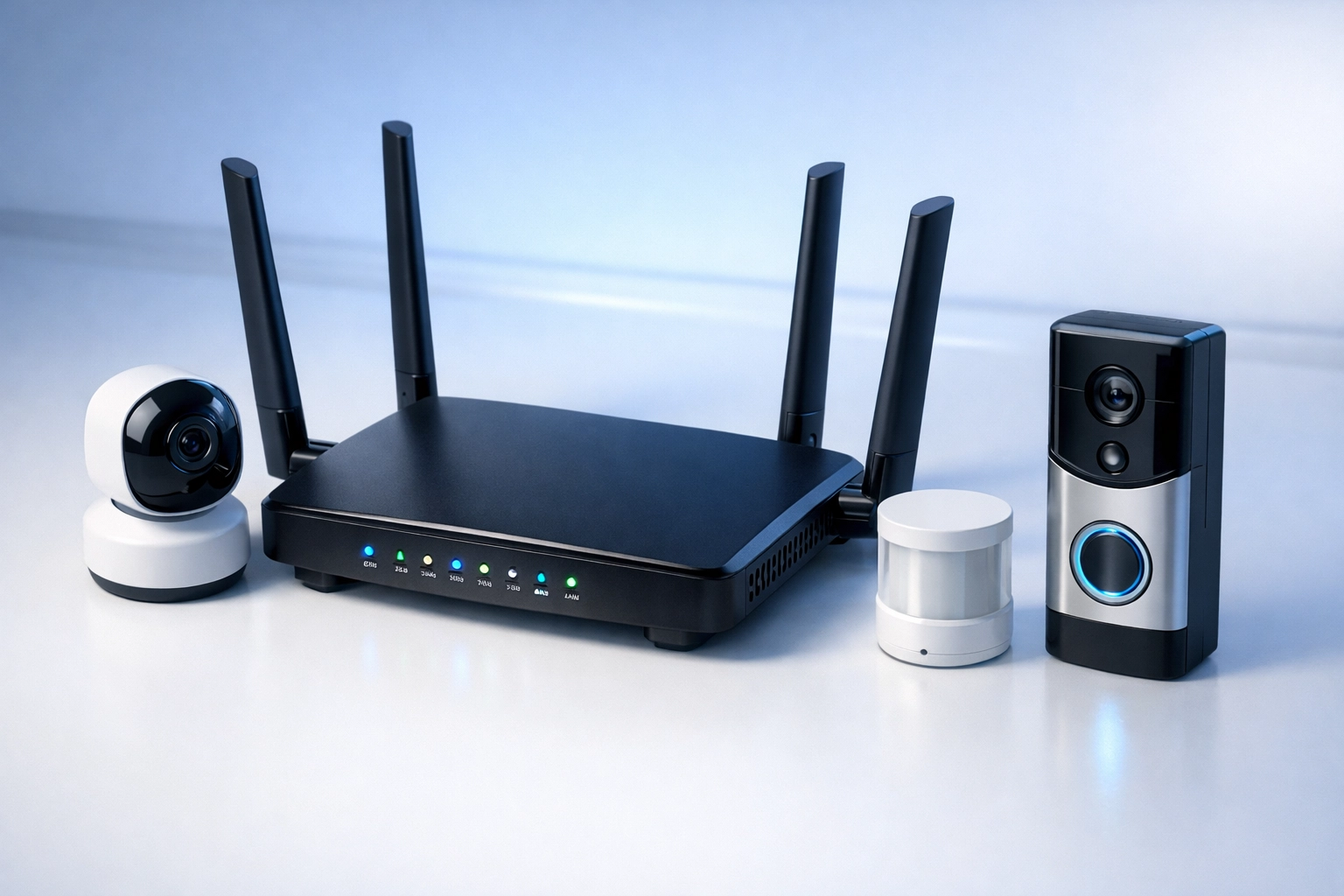
Cape Town security isn't just about visible deterrents anymore. It's about building an ecosystem of connected devices that work together seamlessly to keep your property safe. And that ecosystem needs a rock-solid foundation: your network.
You wouldn't build a house on sand, so don't build your security system on dodgy WiFi.
Whether you're installing security from scratch or upgrading an existing setup, getting the network infrastructure right isn't optional: it's foundational. Because a security camera that can't send you alerts, a doorbell that can't stream video, or an alarm system you can't control remotely isn't security. It's just expensive décor.
Want to make sure your Cape Town home security actually works when it counts? Let's talk about building the network infrastructure to support it properly. Get in touch with WiFi Heroes and let's make your home safe and smart: the right way.
Because in Cape Town, security isn't paranoia. It's just good sense. And good sense says your WiFi matters more than you think.