
In a hospital, every second counts. From monitoring a patient's vital signs to accessing critical medical records, reliable connectivity isn't just a convenience: it's a lifeline. As Cape Town's healthcare sector continues to modernise, the demand for robust, secure, and seamless WiFi coverage has never been higher.
Whether you're managing a large public hospital like Groote Schuur or Tygerberg, or overseeing operations at a private facility, the reality is the same: your WiFi network is now as essential as your medical equipment. Let's explore what it takes to deliver hospital-grade connectivity in the Mother City.
Why Hospital WiFi Is Different From Any Other Installation
Hospitals aren't like offices, shopping centres, or even universities. They present a unique cocktail of challenges that make WiFi installation genuinely complex.
High device density is the first hurdle. Think about it: a single ward might have dozens of connected medical devices, staff smartphones, tablets for patient records, bedside entertainment systems, and visitors checking their phones. That's hundreds: sometimes thousands: of devices competing for bandwidth across a facility.
Structural complexity adds another layer. Cape Town hospitals often combine older buildings with modern extensions. You'll find thick concrete walls, lead-lined radiology rooms, and metal equipment that can wreak havoc on wireless signals. Getting consistent coverage from the basement pharmacy to the rooftop helipad requires careful planning and professional-grade equipment.
Critical reliability requirements set healthcare apart from other sectors. When a nurse needs to access a patient's allergy information or a surgeon requires real-time imaging during a procedure, "the WiFi is down" simply isn't an acceptable answer.

The Life-Saving Importance of Reliable Connectivity
Modern healthcare runs on data. Electronic Health Records (EHRs), connected medical devices, telehealth consultations, and even basic communication between departments all depend on stable WiFi.
Consider these scenarios where connectivity becomes critical:
- Emergency departments where staff need instant access to patient histories and lab results
- ICU monitoring systems that continuously transmit vital signs to nursing stations
- Operating theatres where surgeons may reference scans or consult with specialists remotely
- Pharmacy systems that verify prescriptions and check for drug interactions in real-time
A network dropout during any of these moments could delay treatment, cause medication errors, or worse. That's why medical-grade WiFi infrastructure is designed with redundancy built in: if one access point fails, others seamlessly pick up the load.
Cape Town's major hospitals are already recognising this need. Facilities like Groote Schuur, Tygerberg, Khayelitsha Hospital, and Mowbray Maternity Hospital have implemented eduroam WiFi access through partnerships with the Western Cape Government and Liquid Intelligent Technologies. Private facilities like Mediclinic have rolled out their MCGUEST network to support both patient connectivity and medical device integration.
But having WiFi isn't the same as having reliable WiFi. That's where professional installation and ongoing support make all the difference.
Security First: Protecting Patient Data Under POPIA
If reliability is the heart of hospital WiFi, security is its immune system. Healthcare facilities handle some of the most sensitive personal information imaginable: medical histories, test results, treatment plans, and billing details.
Under South Africa's Protection of Personal Information Act (POPIA), healthcare providers have a legal obligation to protect this data. A poorly secured WiFi network isn't just a technical problem; it's a compliance risk that could result in significant penalties and, more importantly, a breach of patient trust.

What does secure hospital WiFi look like?
- Enterprise-grade encryption (WPA3) to protect data in transit
- Network segmentation to isolate sensitive systems from general traffic
- Strict access controls with role-based permissions
- Continuous monitoring for unusual activity or potential intrusions
- Regular security audits and firmware updates
At WiFi Heroes, we design hospital networks with security baked in from the start: not bolted on as an afterthought. We understand that protecting patient data isn't just about technology; it's about maintaining the trust that patients place in their healthcare providers.
The Art of Network Segmentation: Staff vs. Guests
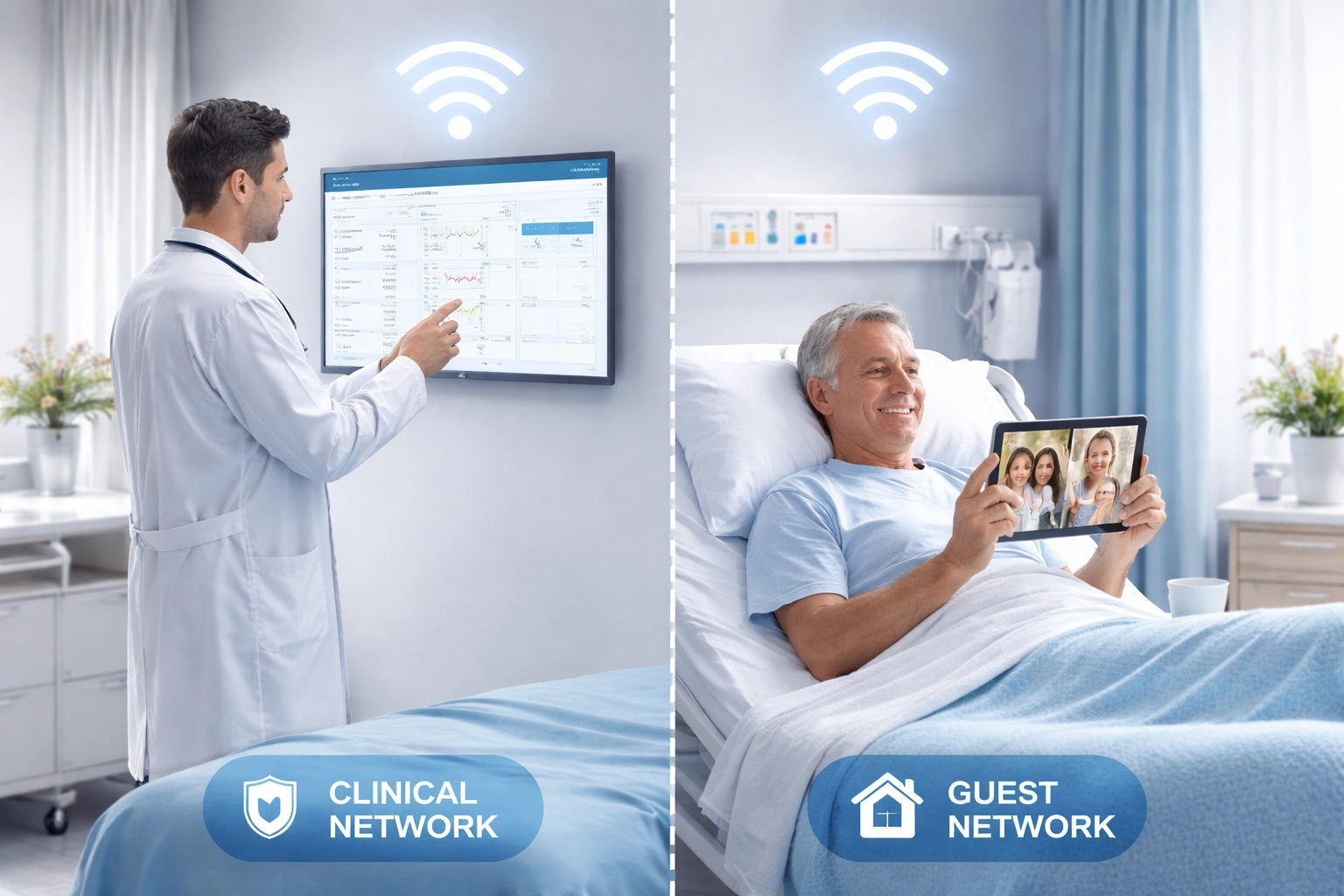
One of the most important principles in hospital WiFi design is keeping different types of traffic separate. You wouldn't want a visitor streaming Netflix to slow down the network that's transmitting a patient's ECG readings.
A well-designed hospital network typically includes:
Clinical Network – Reserved for medical devices, electronic health records, and staff communications. This network requires the highest levels of security, reliability, and bandwidth priority. Only authorised devices and personnel can access it.
Administrative Network – For billing systems, HR functions, and general office work. While still secure, it doesn't require the same real-time reliability as clinical systems.
Guest Network – Available to patients and their families. This provides a welcome amenity (nobody enjoys being in hospital, so a bit of connectivity comfort goes a long way) while keeping visitors completely isolated from sensitive hospital systems. Mediclinic's MCGUEST network is a good example: users simply register with their cellphone number and receive an OTP to connect.
IoT/Device Network – Increasingly, hospitals use smart building systems for climate control, security cameras, and asset tracking. These devices need their own segregated network to prevent them from becoming security vulnerabilities.
Proper segmentation requires thoughtful planning, quality hardware, and expert configuration. It's not something you can achieve with off-the-shelf consumer routers.
Conquering Coverage Challenges in Complex Facilities
Walk through any Cape Town hospital, and you'll quickly see why achieving seamless coverage is so tricky. You might pass through:
- A heritage building with 50cm-thick walls
- A modern glass-fronted wing
- Underground parking and service tunnels
- Garden courtyards and outdoor waiting areas
- Rooftop areas with helicopter landing facilities
Each environment has different signal propagation characteristics. What works in a modern open-plan ward won't work in a lead-shielded radiology suite.
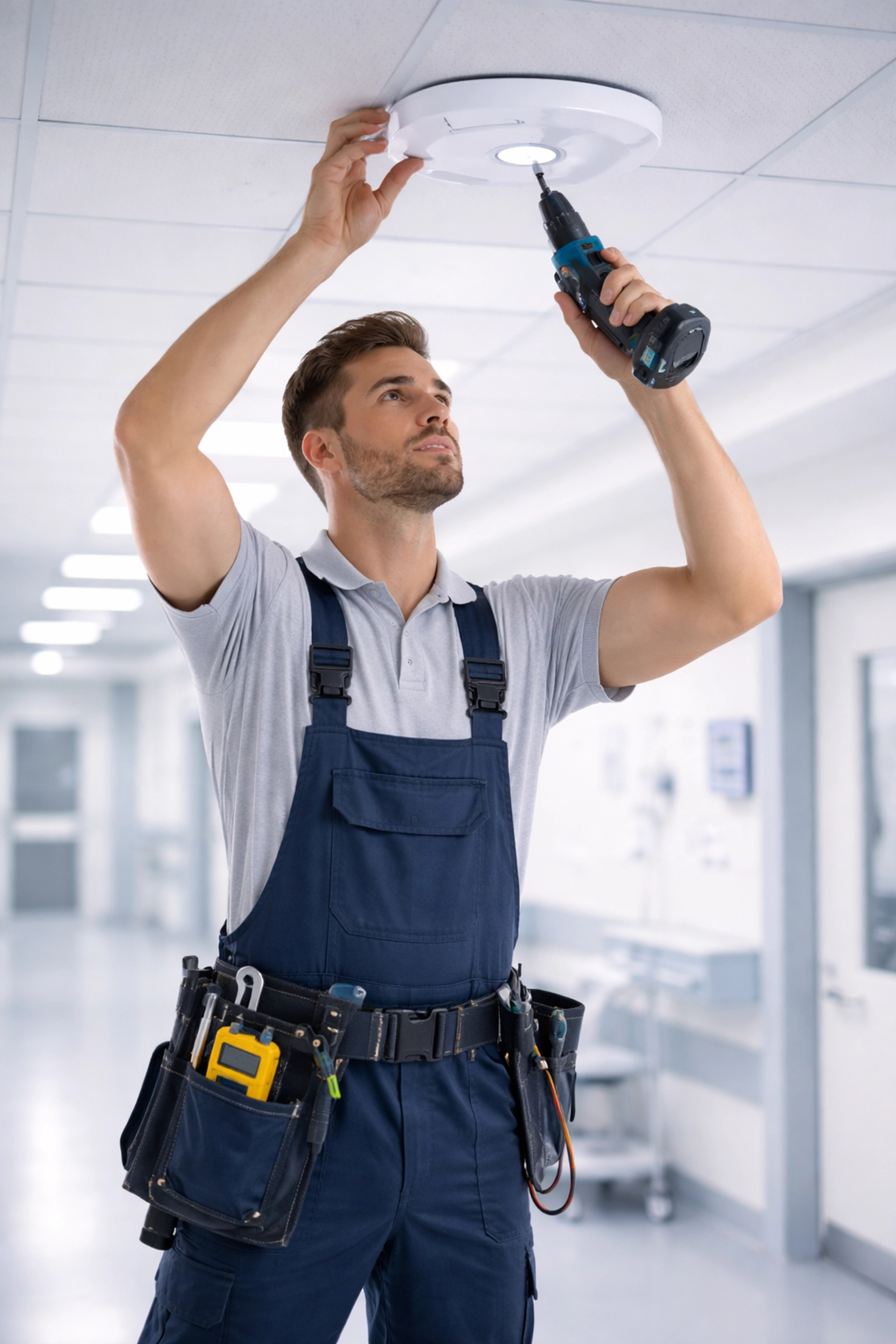
The solution? A comprehensive site survey followed by strategic placement of commercial-grade access points. Unlike consumer mesh systems (which are great for homes but not designed for healthcare), enterprise access points can handle hundreds of simultaneous connections, support advanced roaming protocols, and be centrally managed.
We also consider the unique interference challenges in hospitals. MRI machines, for example, generate powerful electromagnetic fields. Certain medical equipment operates on frequencies that can clash with WiFi. A professional installation accounts for all of these factors.
Why 24/7 Support Isn't Optional in Healthcare
Hospitals never close. Neither should their WiFi support.
Imagine a network issue striking at 3 AM on a Sunday. In an office, that's an inconvenience that can wait until Monday. In a hospital, it could compromise patient care.
That's why WiFi Heroes offers rapid response times and round-the-clock support for healthcare clients. When you're responsible for a facility where lives are literally on the line, you need a partner who understands urgency.
Our support doesn't just mean fixing things when they break. It includes:
- Proactive monitoring to catch issues before they cause problems
- Regular maintenance and firmware updates
- Capacity planning as your facility grows or adds new devices
- Emergency response for those critical moments when every minute matters
The WiFi Heroes Approach to Hospital Installations
At WiFi Heroes, we've learned that successful hospital WiFi projects require more than technical expertise: they require collaboration. Healthcare facilities have unique workflows, compliance requirements, and operational constraints that must be understood before a single access point is mounted.
Our process typically includes:
- Consultation with facility managers, IT teams, and clinical staff to understand requirements
- Comprehensive site survey to map coverage challenges and interference sources
- Custom network design with appropriate segmentation and security measures
- Professional installation with minimal disruption to hospital operations
- Testing and optimisation to ensure every area has reliable coverage
- Ongoing support and monitoring to maintain performance over time
We've helped properties across Cape Town overcome complex coverage challenges, and we bring that same problem-solving mindset to healthcare environments.
Ready to Upgrade Your Hospital's Connectivity?
Whether you're planning a new facility, upgrading an ageing network, or simply frustrated with dead zones and dropped connections, we'd love to chat.
Reliable hospital WiFi isn't a luxury: it's a necessity for modern healthcare delivery. Let's make sure your facility has the connectivity it needs to save lives, protect data, and support both staff and patients.
Get in touch with WiFi Heroes to discuss your hospital's WiFi needs. Because when connectivity matters most, you need a hero.