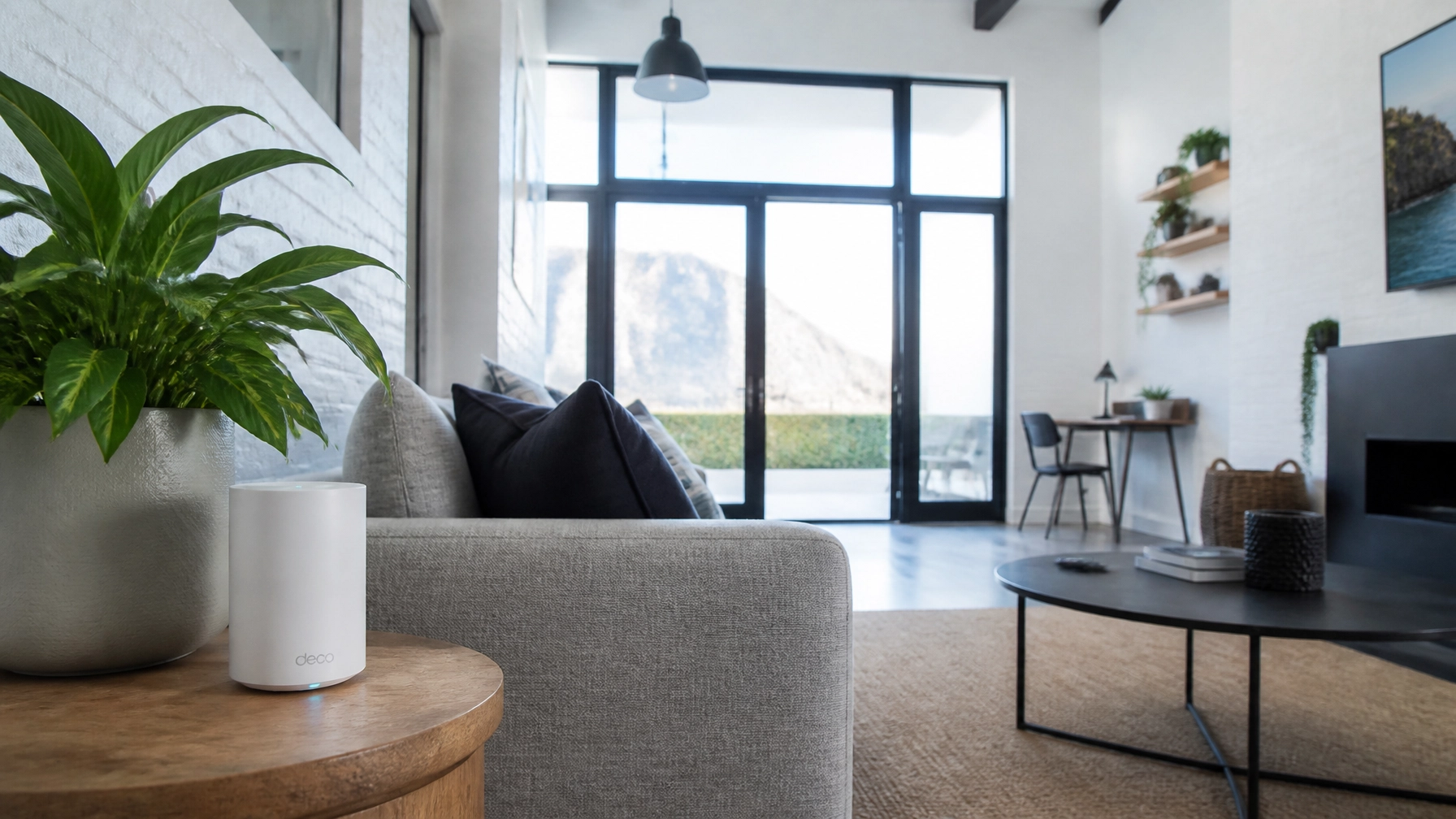

If you live in a beautiful, sprawling home in Constantia, a multi-storey gem in Camps Bay, or a classic Victorian in Gardens, you’ve likely felt the "WiFi pain." You know the one, where your Netflix stream is 4K in the lounge, but the moment you walk into the kitchen to grab a coffee, your connection drops faster than the temperature when the South-Easter blows.
At WiFi Heroes, we get calls every day from homeowners asking the same thing: "Should I just buy one of those Mesh WiFi kits from the shop?"
The short answer is: maybe. The long answer? Well, that’s a bit more complicated, especially when you’re dealing with the unique architectural quirks of Cape Town properties. Today, we’re pulling back the curtain on the "Mesh vs. The World" debate to help you figure out what your home actually needs.
Why Cape Town Homes Are WiFi Killers
Before we talk about Mesh, we have to talk about your house. Most of the marketing for WiFi systems comes from the US or Europe, where many homes are built with drywall and timber frames. WiFi signals love drywall; they sail right through it.
But here in the Mother City? We build things to last. We’re talking double-thick clay bricks, solid concrete slabs between floors, and sometimes even stone walls in older heritage properties. To a WiFi signal, a standard Cape Town interior wall is basically a lead shield.
When you add a second or third storey into the mix, that reinforced concrete floor becomes a massive barrier. This is why a single, powerful router in the hallway almost never provides "flawless" coverage in a large Cape Town home.

What Exactly is Mesh WiFi?
Think of Mesh WiFi as a relay team. Instead of one single router trying to do all the work, you have a "main" hub connected to your fibre box and several "nodes" placed around the house. These nodes talk to each other wirelessly, creating a single, seamless network.
The big selling point is simplicity. You plug them in, use an app, and suddenly you have WiFi in the bedroom. It’s a massive step up from those cheap "range extenders" that create a second network (like Home_WiFi_EXT) which forces your phone to constantly jump between signals.
The Benefits of Mesh:
- Easy Setup: Most systems are designed for people who don't want to spend their Saturday afternoon crimping cables.
- Seamless Roaming: You can move from the study to the braai area without your Zoom call dropping.
- Scalability: If you still have a dead spot, you just buy another node and add it to the family.
The "Mesh Trap": When Wireless Isn't Enough
Here is the truth that the big box retailers won't tell you: Mesh nodes still rely on a wireless connection to talk to each other.
If Node A is in the lounge and Node B is in a bedroom behind two thick brick walls, Node B is going to receive a very weak signal from Node A. It might show "Full Bars" on your phone because your phone is close to Node B, but the actual internet speed will be sluggish because the "backhaul" (the connection between the nodes) is struggling.
In large Cape Town properties, we often see people buying 5 or 6 Mesh nodes to try and "punch through" the walls. This leads to a crowded airwave environment where the nodes are actually fighting each other for space, often making the connection worse.

The Pro Choice: Wired Access Points
If you really want the "Gold Standard" of connectivity, the kind of stuff we install for smart Cape Town apartments, you need to look at Wired Access Points (APs).
Unlike a Mesh node that catches a wireless signal and repeats it, a Wired Access Point is connected back to your main router via an Ethernet cable hidden in your walls or ceiling.
Why Wired Wins:
- Zero Signal Loss: Because the data travels through a physical cable, there is no interference from walls or floors.
- Full Speed Everywhere: If you have a 500Mbps fibre line, you’ll actually get 500Mbps at every Access Point.
- Reliability: Cables don't care if your neighbour just bought a high-powered microwave or if the weather is acting up.
At WiFi Heroes, we often recommend brands like Ubiquiti. It’s the same tech we use for high-demand environments like hospitals or schools, but scaled down for the home. It gives you that "Mesh" feeling of having one single network, but with the raw power of a wired backbone.
Mesh vs. Wired: Which One Is for You?
So, do you actually need Mesh, or should you go for a wired setup? Let’s break it down by the type of home you have.
1. The Small-to-Medium Townhouse
If you’re in a modern townhouse with thinner internal walls and maybe two levels, a high-quality Mesh system (like an Eero or a TP-Link Deco) will likely do the trick beautifully. It’s cost-effective and gets the job done without the need for drilling holes for cables.
2. The Multi-Storey "Fortress"
If you have a home with concrete slabs between floors, Mesh usually fails to deliver on the upper levels. We strongly suggest running at least one cable to each floor and installing a wired Access Point. This ensures your home office upstairs works just as well as the TV room downstairs.
3. The Sprawling Single-Level Home
For large homes that spread out over a big plot (think Bishopscourt or Constantia), a "Hybrid" approach is often best. We wire the main areas (Lounge, Office, Main Bedroom) and perhaps use a Mesh node to extend coverage to a guest wing or the patio.

The Cost Factor
We know what you’re thinking: "Cabling sounds expensive."
While the upfront cost of a professional installation with Wired Access Points is higher than buying a Mesh kit from a shop, you have to look at the long-term value. A properly wired home is "future-proofed." As fibre speeds get faster (we're already seeing 1Gbps and beyond in Cape Town), a purely wireless Mesh system will eventually become a bottleneck. A wired system will handle those speeds for the next decade without breaking a sweat.
Plus, if you're ever looking to sell, a home with a built-in, professional WiFi network is a massive selling point in the modern "work from home" era.
Don't Forget the Outdoor Spaces!
One thing Capetonians love is our outdoor living. Whether it’s a pool deck or a braai area, we want our music and streaming to follow us outside. Standard Mesh nodes aren't built for the Cape Town wind, salt air, or moisture.
If you want signal in the garden, we usually recommend a dedicated outdoor Access Point. These are weatherproofed and designed to throw a signal much further than an indoor node. We’ve done setups like this for everything from malls to gyms, and the results are night and day compared to a "node sitting in a window."

The WiFi Heroes Verdict
So, do you really need Mesh WiFi?
- Yes: If your home is medium-sized, has standard walls, and you want an easy, DIY fix.
- No: If your home is built like a bunker, has multiple levels of concrete, or if you demand 100% reliability for gaming and video calls.
If you’re tired of the "buffering wheel of death" and want a solution that actually works for your specific Cape Town home, don't just guess. The "Repeater Trap" is real, and we’re here to help you avoid it.
At WiFi Heroes, we don't just sell boxes; we design networks. We’ll look at your floor plan, check your wall thickness, and give you a setup that actually covers every corner of your property.
Ready to say goodbye to dead zones? Check out our blog for more tips, or get in touch with us today. Let’s make you the hero of your own home network!