If you’ve ever stood in the middle of a home renovation or sat through a meeting about upgrading your office internet here in Cape Town, you’ve probably heard the terms "Cat6" and "Cat6A" thrown around. Usually, it’s followed by some technical jargon about frequencies and megahertz that makes most people want to just nod their heads and hope for the best.
But here’s the thing: the wires hidden inside your walls are the literal backbone of your digital life. Whether you’re streaming 4K movies in Constantia, running a boutique agency in Woodstock, or trying to ensure your security cameras actually record when the power comes back on after load shedding, the cable you choose matters.
At WiFi Heroes, we get asked this question almost daily: "Which one do I actually need?"
Today, we’re stripping away the tech-speak and giving you a straight-up guide on Cat6 vs Cat6A, specifically tailored for the way we live and work in the Mother City.
The Basics: What’s in a Name?
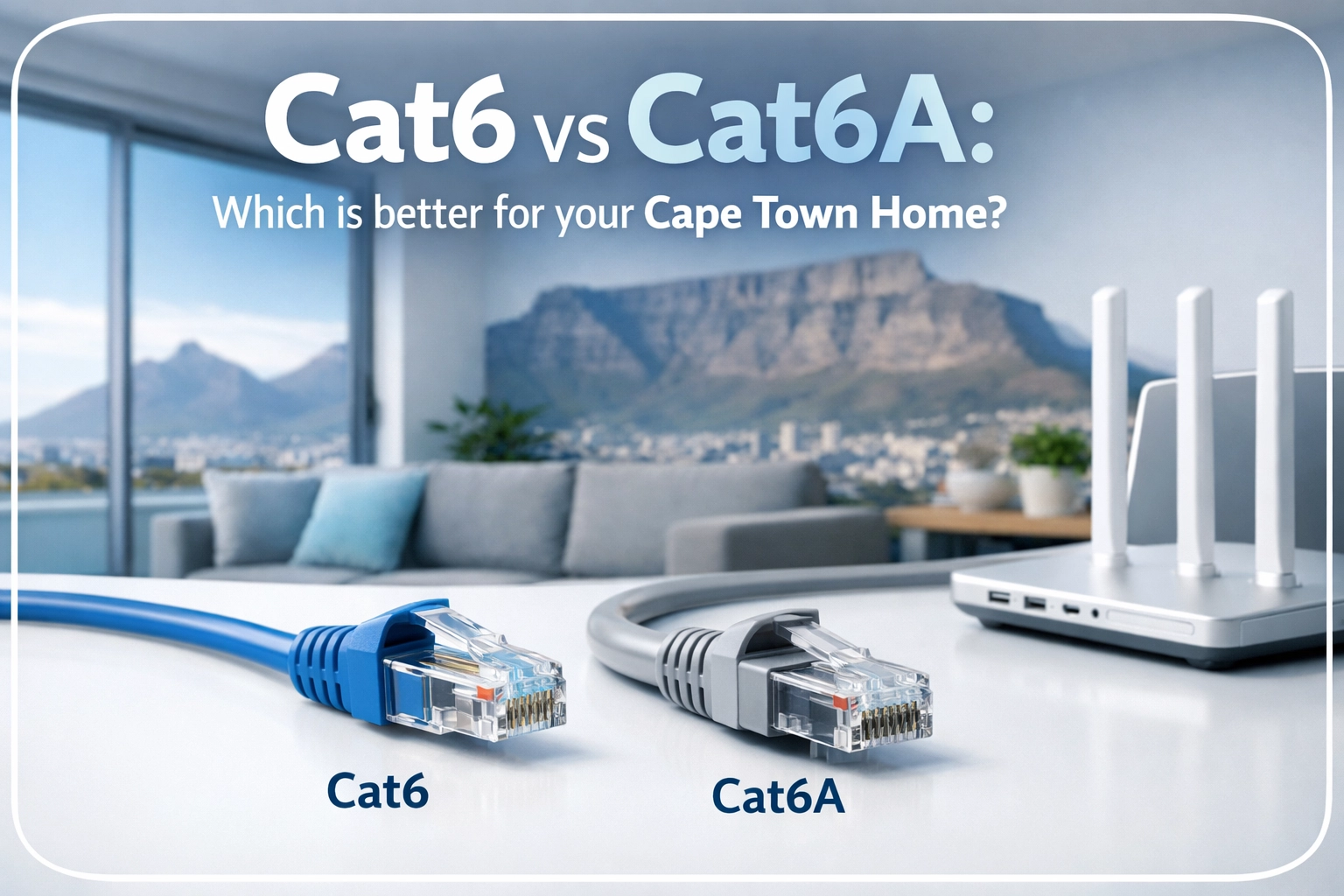
To understand the difference, let’s use a simple analogy. Imagine your internet data is a fleet of cars.
- Cat6 is like a high-quality, four-lane highway. It’s fast, reliable, and can handle a lot of traffic without breaking a sweat.
- Cat6A (the "A" stands for Augmented) is like doubling those lanes and adding a massive soundproof barrier on the sides to keep things even smoother.
Both of these cables are "twisted pair" copper wires. The "Category" (Cat) tells you how much data they can carry and how well they handle interference. In a world where we are increasingly reliant on high-speed fibre and smart home gadgets, choosing between them is a choice between what works for now and what works for the next ten years.
The Technical Stuff (Explained Simply)
Let’s look at the three main things that separate these two:
1. Speed and Bandwidth
Cat6 is designed to handle speeds of up to 1 Gigabit per second (Gbps). To put that in perspective, most "fast" home fibre in Cape Town is currently around 100Mbps to 500Mbps. So, Cat6 is already faster than what most of us are getting from our ISP. However, Cat6 can actually do 10Gbps, but only over short distances (usually up to about 35-55 meters).
Cat6A, on the other hand, is a beast. It handles 10Gbps effortlessly over much longer distances (up to 100 meters). It also has double the "bandwidth" (500MHz vs 250MHz). Think of bandwidth as the width of the pipe: the wider the pipe, the more data can flow through at once without getting stuck.
2. Distance
In a massive Atlantic Seaboard mansion or a sprawling office floor in the CBD, distance matters. If your cable run from the server room to the furthest bedroom is over 50 meters, Cat6 starts to lose its "10-Gigabit" superpowers. Cat6A keeps its top speed all the way to the end of the line.
3. Shielding and Interference
This is where it gets interesting for Cape Town homeowners. Many of our homes are built with thick brick and mortar, and we often cram a lot of cables into small conduits. Cat6A usually comes with extra shielding. This protects your data from "crosstalk": which is basically the electronic noise that happens when cables are too close to each other.
Why Should You Care About "Future-Proofing"?
We live in a fast-moving world. Just five years ago, a 20Mbps fibre line was considered "fancy." Today, it’s the bare minimum.
The WiFi 7 Revolution
We are currently entering the era of WiFi 7. This new standard of wireless internet is ridiculously fast: so fast, in fact, that an old Cat5e or even a standard Cat6 cable might actually become the bottleneck in your system. If you invest in a high-end WiFi 7 mesh system to cover your whole house, you don’t want it "choking" because the cable connecting it to the router can’t keep up.
Using Cat6A ensures that as your devices get smarter and your fibre speeds hit those 1Gbps+ marks, your internal wiring won’t be the thing holding you back. You can learn more about how many nodes you might need for this kind of setup in our guide on mesh WiFi nodes.
The Rise of 4K and 8K Streaming
If you have a dedicated cinema room or several teenagers gaming and streaming at the same time, your network load is massive. Cat6A provides that extra "headroom" to ensure no one gets the dreaded buffering wheel while you're trying to watch the Springboks play in 4K.
The Practicalities: Installing in Cape Town
At WiFi Heroes, we deal with the reality of Cape Town architecture every day. From the 100-year-old walls of Gardens to the sleek, steel-and-glass offices of Century City, each building presents a challenge.
The Thickness Factor
Cat6A is significantly thicker and stiffer than Cat6. This might not sound like a big deal until you try to pull it through an old 20mm conduit already filled with electrical wires. It requires more space and wider turns. If your home has very narrow pipes in the walls, Cat6 might be your only physical option without cutting into the plaster.
The Cost Factor
Cat6A is more expensive: not just the cable itself, but the "jacks" and connectors too. For a small flat or a standard three-bedroom home, the price jump might not feel worth it. However, for a business or a new-build luxury home, the cost of replacing cables five years from now will be ten times higher than just putting in the good stuff today.
Security and Your Home Network
One often overlooked reason to get your cabling right is security. We know that Cape Town home security starts with your WiFi.
High-definition CCTV cameras often use "Power over Ethernet" (PoE). This means a single cable sends both power and data to the camera. Cat6A is actually better at dissipating heat than Cat6, which makes it slightly more efficient for running several high-powered security cameras or advanced outdoor access points over long distances. If you're looking into CCTV for your property, the "hero" choice is often to go with a robust cabling foundation.
Which One Should You Choose?
So, let's break it down into a quick "cheat sheet."
Choose Cat6 if:
- You’re on a budget but want great performance.
- Your home isn't massive (cable runs are under 40-50 meters).
- You have narrow conduits that won't fit thick cables.
- You mostly use the internet for standard streaming, WFH, and browsing.
- You want a solid upgrade over your current "dead zone" WiFi.
Choose Cat6A if:
- You are building a new home or doing a "down-to-the-bricks" renovation.
- You want the absolute best and never want to think about cables again.
- You run a business with multiple staff members sharing a single network.
- You have a large property with long distances between the router and the rooms.
- You’re planning to install a high-end WiFi 7 mesh system.
- You do a lot of heavy lifting: video editing, large file transfers, or hardcore gaming.
Why Professional Structured Cabling Matters
It’s tempting to try and DIY your network cabling, but there is an art to it. If you bend a Cat6A cable too sharply, you can actually ruin its performance. If you don't terminate the ends correctly, you’ll get interference that makes your high-speed cable perform like an old dial-up modem.
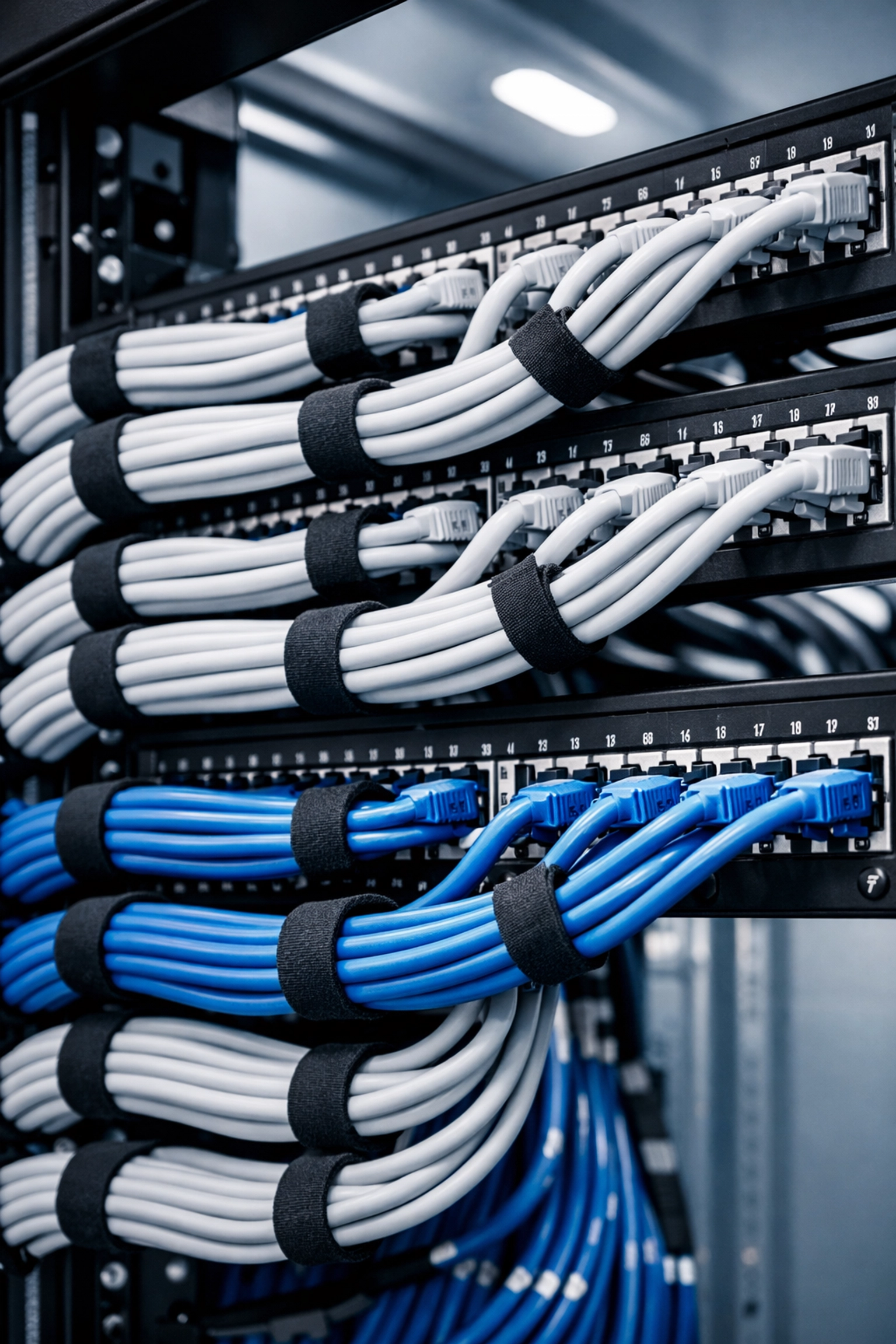
This is where WiFi Heroes comes in. We specialize in structured cabling services. We don’t just "run wires"; we design a network map for your home or business that ensures maximum coverage and zero bottlenecks. We take care of the "heavy lifting": from navigating those tricky Cape Town ceiling spaces to ensuring your server rack looks like a work of art.
Final Thoughts
At the end of the day, whether you go for Cat6 or Cat6A, the goal is the same: a frustration-free digital life. There is nothing worse than paying for a 500Mbps fibre line only to get 20Mbps in your home office because the wiring is outdated.
If you’re still not sure which way to go, don’t stress! That’s what we’re here for. We can take a look at your floor plan, your current usage, and your future goals to give you the best advice.
Ready to banish the buffering for good? Whether you're in the Southern Suburbs, the Northern Suburbs, or right in the heart of the city, the Hero team is ready to help.
Get in touch with us today:
- Visit our site: wifiheroes.co.za
- Book a consultation: Contact Us
Let’s get your Cape Town home connected the right way!